At high frequencies, small physical imperfections become electrical problems. When you strip coaxial cable, tiny nicks in the center conductor, uneven dielectric steps, or damaged braid can change impedance, increase return loss, and introduce intermittent shielding failures — especially in compact RF assemblies. This guide explains how stripping quality influences performance and where it fits inside the broader coaxial cable manufacturing process, with practical QC and equipment considerations.
Coaxial Cable Manufacturing Process: Where Stripping Fits in RF Assembly Quality
The Typical Assembly Flow
| Process Step | What Happens | Quality Risk |
|---|
| Cutting | Cable cut to specified length | Length tolerance affects electrical delay in matched-length assemblies |
| Stripping (multi-layer) | Jacket, braid/shield, and dielectric removed to defined dimensions | Every layer transition is a potential geometry error |
| Braid preparation | Braid folded back, trimmed, or combed for connector attachment | Braid damage or inconsistent preparation reduces shield effectiveness |
| Connector termination | Center pin crimped or soldered; outer body crimped or soldered | Terminal quality depends on the geometry delivered by stripping |
| Inspection and test | Visual, dimensional, and RF electrical test | Defects introduced in stripping often surface here |
Why Stripping Is a Critical-to-Quality Step
Stripping is the operation that creates the geometry the connector relies on. The center conductor diameter exposure, the dielectric outer diameter at the crimp zone, and the braid condition at the connector interface all come from the stripping operation. Errors at this stage are not correctable at the termination step — they become permanent characteristics of the finished assembly.
Hidden stripping defects are the most costly category: a nicked center conductor passes visual inspection and even low-frequency continuity tests, but fails under vibration or at frequency when the reduced cross-section creates a resistance hot spot or an impedance step.
Strip Coaxial Cable Correctly: Geometry Control That Defines Termination Quality
The Strip Geometry Requirements That Matter
| Dimension | What It Controls | Specification Implication |
|---|
| Jacket strip length | Exposed braid length for connector body engagement | Must match connector's required braid contact length ±0.5 mm typically |
| Dielectric strip length | Center conductor exposure for pin seating | Too short = incomplete pin engagement; too long = air gap inside connector |
| Concentricity | Center conductor centered in remaining dielectric | Off-center conductor changes local impedance; affects return loss |
| Braid cut face | Clean, defined edge at the braid/dielectric boundary | Ragged or torn braid frays into the connector body — creates shorts |
| Dielectric cut face | Smooth perpendicular face at the center conductor base | Smeared or angled dielectric changes impedance at the step |
Common Stripping Defects and Their Assembly Consequences
| Defect | How It Occurs | Assembly Consequence |
|---|
| Nicked center conductor | Blade contact during dielectric removal | Stress concentration — fractures under flex or vibration |
| Torn or frayed braid | Dull blade or incorrect depth | Braid strands migrate into the connector body; short-circuit risk |
| Smeared dielectric | Heat or dull blade compresses dielectric rather than cutting it | Dimensional change at the critical impedance step |
| Uneven jacket cut | Blade not perpendicular to cable axis | Connector body does not seat concentrically |
| Inconsistent strip length | Feed length variability or poor depth control | Pin engagement varies across production; RF performance is inconsistent |
Strip Coaxial Cable for High Frequency: How Defects Affect Impedance and Return Loss
The Physics of Why Stripping Matters at GHz
A coaxial cable maintains 50Ω (or 75Ω) impedance because the ratio of the outer conductor diameter to the inner conductor diameter, and the dielectric constant of the material between them, are tightly controlled along the cable's length. Any physical discontinuity — a dimensional change, a material change, or a gap — creates a local impedance deviation. At high frequency, this deviation causes signal reflections.
| Defect | Impedance Effect | Measurement Outcome |
|---|
| Nicked center conductor | Reduced conductor diameter → local impedance increase | Higher return loss (reflected signal) at the defect location |
| Smeared dielectric | Changed effective dielectric constant → impedance shift | Return loss spike; frequency-dependent |
| Torn braid at shield boundary | Gaps in shield → local radiation and susceptibility | Increased EMI; noise floor elevation in sensitive measurements |
| Dielectric length inconsistency | Air gap or compression inside connector | Standing wave pattern in the assembled connector; VSWR degradation |
Where Issues Show Up in Testing and the Field
The connection between stripping quality and RF performance is not always visible in initial testing. Problems often emerge:
At elevated frequency where the electrical wavelength approaches the scale of the physical defect
Under mechanical vibration where a nicked conductor strand breaks and creates an intermittent open
After thermal cycling where differential expansion opens a marginal contact at a poorly stripped interface
In field returns where the assembly passes factory test but fails in the installed environment
This is why first-article inspection and process control in the stripping step are more cost-effective than end-of-line RF testing alone.
Coaxial Cable Manufacturing Process QC: Inspection and Testing After Stripping
Inspection Methods at the Stripping Stage
| Inspection Method | What It Detects | When to Use |
|---|
| Magnified visual inspection (10–40×) | Surface nicks on conductor, braid fray, dielectric smear, cut face quality | 100% on critical assemblies; AQL sampling on production runs |
| Strip-length gauge | Dimensional conformance of each stripped layer | First article and periodic production checks |
| Concentricity gauge or optical comparator | Center conductor position within dielectric | Critical for tight impedance tolerance assemblies |
| Pull/retention test | Conductor integrity under tensile load | Validates there is no partial strand break from nicking |
Electrical Validation After Termination
Continuity and DC resistance: confirms center conductor is continuous and shield is intact
Shield resistance measurement: quantifies braid integrity — high shield resistance indicates damaged braid
VSWR or return loss measurement: the RF test that reflects the combined quality of stripping, termination, and connector — frequency sweep shows impedance discontinuities as reflections
Process Control Requirements
First-article inspection: a complete set of strip geometry measurements and visual inspection on the first production piece before any batch is run
Tool calibration schedule: blade condition directly affects strip quality — define replacement interval by number of strips, not calendar time
Work instructions with acceptance images: visual standards communicated to operators through labeled photographs of correct and reject conditions
Scrap and rework tracking: monitor the defect type distribution over time — increasing nick rate indicates blade wear; increasing length variation indicates feed system drift
Strip Coaxial Cable at Scale: Automation vs. Manual and Equipment Selection
Why Automation Improves Stripping Quality
Manual coax stripping with a rotary tool or hand stripper produces acceptable results for prototypes and low-volume work. At production volume, operator variability drives strip length inconsistency and increases nick rate as operators adjust technique to maintain throughput.
| Factor | Manual Stripping | Automated Stripping |
|---|
| Strip length consistency | ±0.5–1.5 mm typical | ±0.1–0.3 mm achievable |
| Nick rate | Operator-dependent; increases with fatigue | Consistent blade control; defined depth |
| Throughput | Limited by operator speed | Defined by machine cycle time; no fatigue factor |
| Changeover | Quick — operator adapts technique | Requires blade and depth setting change |
| Data logging | Not available | Machine-level process data possible |
What to Evaluate in Coaxial Cable Stripping Equipment
| Specification | What to Confirm | Why It Matters |
|---|
| Multi-layer capability | Number of independent strip zones and depth control per zone | Must match the coax construction — some cables have 3–4 layers |
| Depth control precision | Repeatability of blade depth ±mm | Determines nick risk on the center conductor |
| Blade life at the target cable OD | Strips before replacement at rated cut quality | Affects operating cost and quality consistency |
| Cable diameter range | Min and max OD the machine can process | Must cover the full cable range in production |
| Changeover time | Minutes to change from one cable type to another | Affects production scheduling flexibility |
Integration with the Broader Coaxial Cable Manufacturing Process
Confirm the coaxial cable stripping machine output dimensions are validated against the connector family specifications before production qualification
Plan for in-process measurement stations between stripping and termination on high-volume lines
Consider data logging capability at the stripping stage for traceability-required programs (aerospace, automotive, medical)
Conclusion
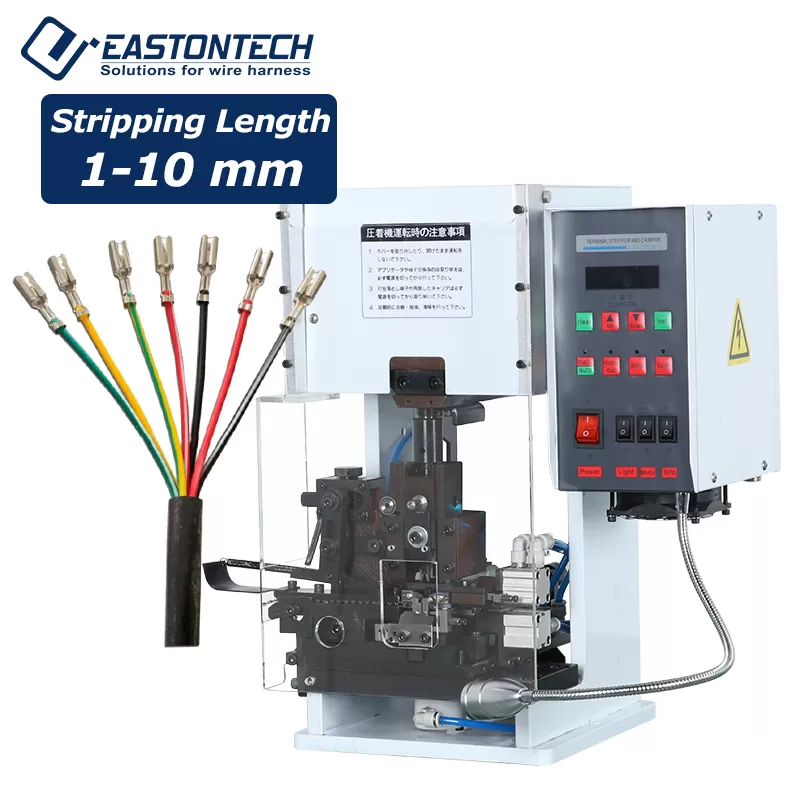
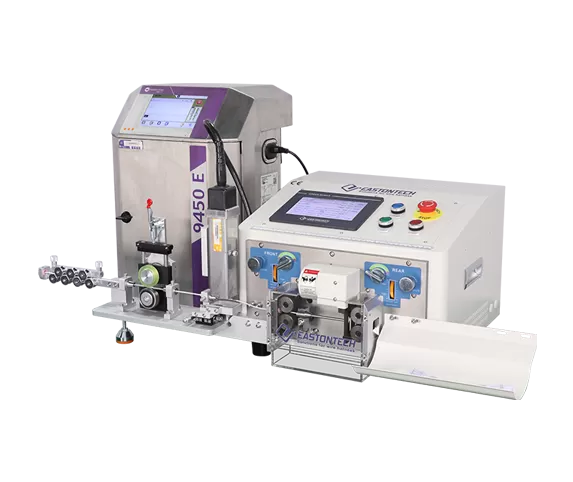
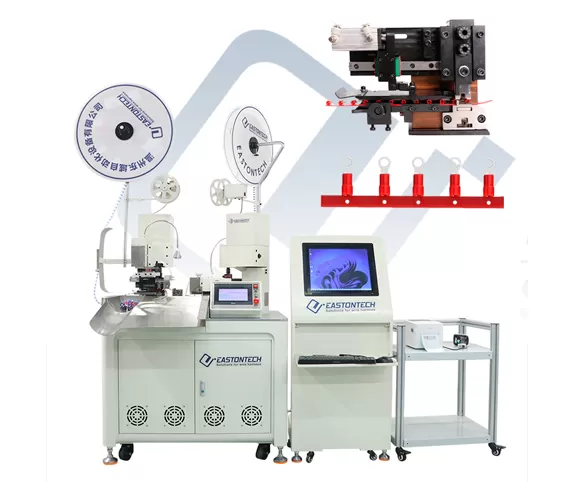
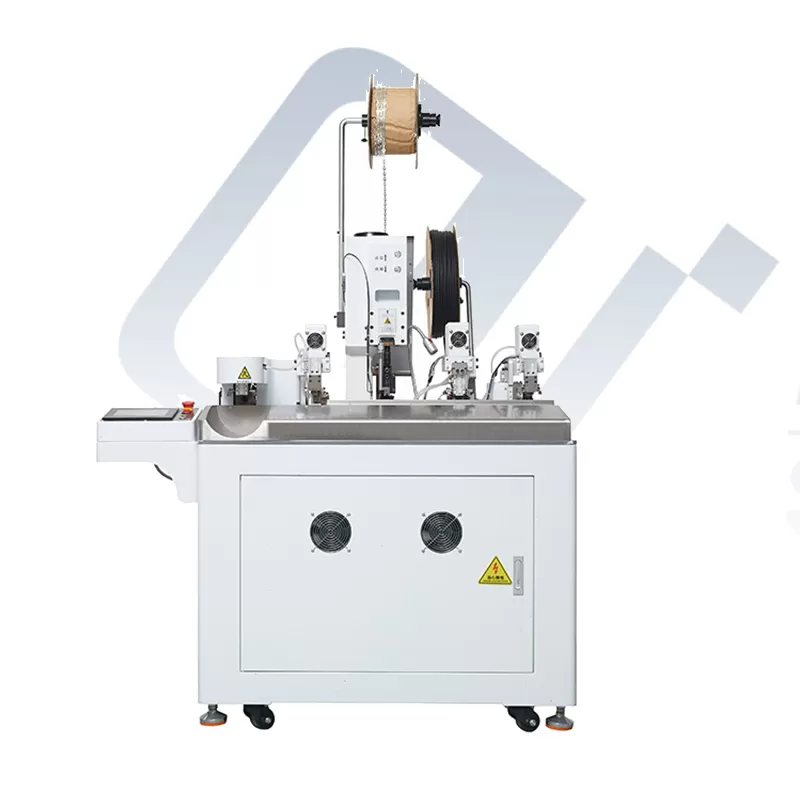
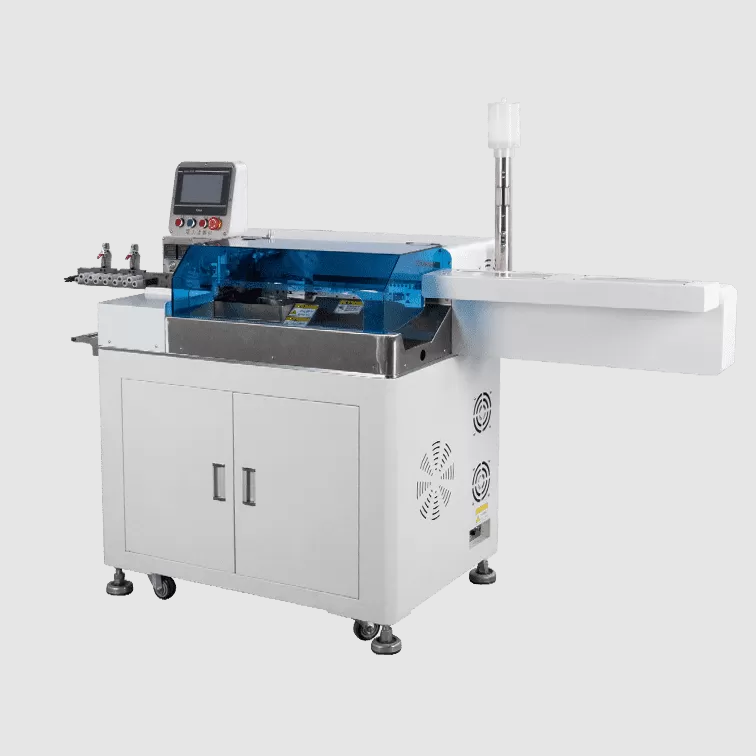
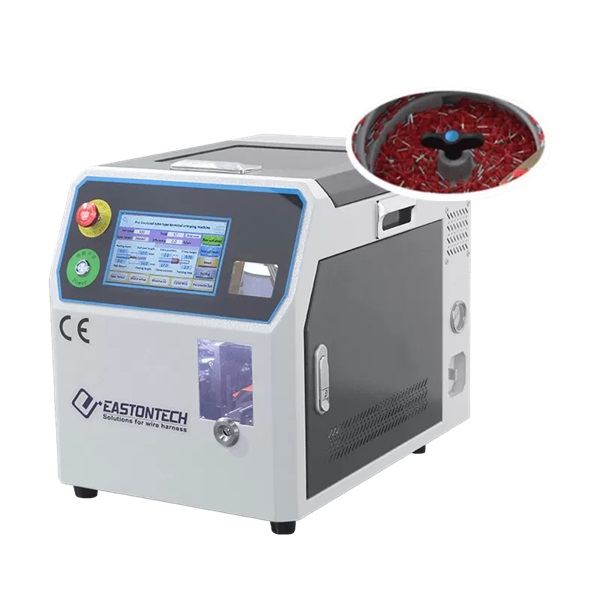
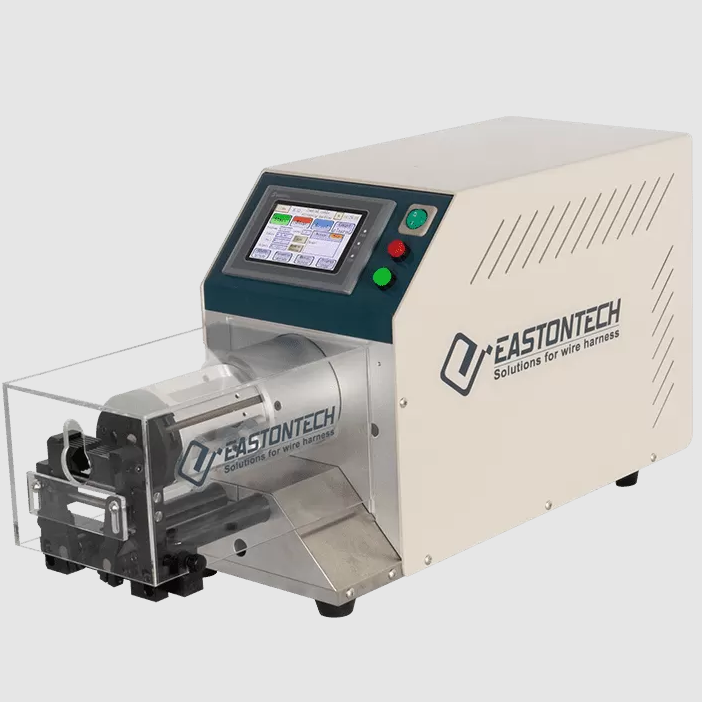
In RF and high-frequency assemblies, stripping is not a prep step — it is a performance-defining operation. When you strip coaxial cable with controlled geometry and zero layer damage, you protect impedance continuity, connector reliability, and EMI shielding through the life of the assembly. Building this into your coaxial cable manufacturing process with the right tooling, inspection standards, and — at production volume — automated stripping equipment from Eastontech is one of the fastest ways to reduce RF test failures and field returns.
FAQ
Q1: Why does stripping quality matter so much at high frequencies?
At GHz frequencies, the electrical wavelength approaches the physical dimensions of stripping defects. A nick in the center conductor, a smeared dielectric face, or a dimensional variation in the strip length creates a local impedance discontinuity — the signal sees a change in the coax geometry and reflects. These reflections appear as return loss degradation and insertion loss increases that worsen as frequency increases.
Q2: What is the most common defect when stripping coaxial cable?
Center conductor nicking and braid damage are the most frequent critical defects. Nicking reduces the conductor cross-section and creates a fatigue stress concentration that leads to fracture under vibration. Braid damage — torn strands, fraying, or inconsistent cut edge — reduces shield effectiveness and can cause shorts inside the connector body after termination.
Q3: How can I tell if stripping defects are causing RF test failures?
Compare strip geometry measurements (conductor exposure, dielectric diameter, concentricity) against the specification for assemblies that fail VSWR or return loss testing. Defective assemblies typically show a specific return loss signature — a reflection at the connector interface — that correlates with dimensional deviation at the strip. First-article inspection with magnified visual and strip gauging can confirm whether stripping is the failure source before committing to production volume.
Q4: Is automated stripping always better than manual for coaxial cable?
For production volume above a few hundred assemblies, automated stripping consistently outperforms manual on strip length accuracy and nick rate. Manual stripping is acceptable for prototype and low-volume work where throughput is not constrained and inspection can catch individual defects. For impedance-critical assemblies or programs with traceability requirements, automation provides the process data that manual stripping cannot.
Q5: Where does stripping fit in the overall coaxial cable manufacturing process?
Stripping is the third step after cable cutting and before connector termination. It is the operation that creates the physical geometry the connector relies on — center conductor exposure for the pin, dielectric outer diameter for the insulator bore, and braid condition for the outer body. The quality of every subsequent step, including termination and final RF testing, is partly a function of what was delivered by the stripping operation.
 English