Wenzhou East World Automation Equipment Co., Ltd.
  • On-Time Delivery
    On-Time Delivery
  • After-Sale Service
    After-Sale Service
  • Quality Assurance
    Quality Assurance
  • Professional Engineer
    Professional Engineer
  • Brand Service
    Brand Service

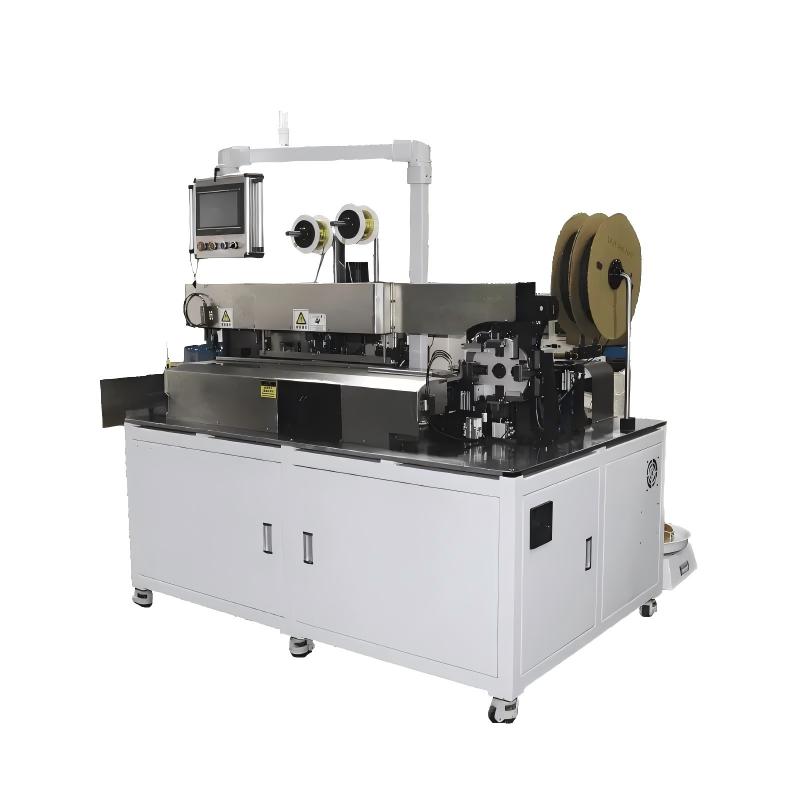
How to Choose the Right Wire Tinning Machine From EASTONTECH?

Selecting a wire tinning machine should be based on total cost of ownership (TCO) and cost per processed wire end, not just initial price.


1. Match Throughput to Actual Demand

  • Define required output (pcs/hour) based on real production needs.

Avoid running equipment at constant maximum capacity, which can affect stability and maintenance cycles.


2. Define Wire Specifications Clearly

  • Consider wire gauge range (AWG), conductor type (solid or stranded), and insulation characteristics.

  • Frequent product changeovers require machines with fast adjustment and repeatable settings.


3. Evaluate Yield Impact

  • Inconsistent tinning length or poor wetting leads directly to rework and scrap.

  • Machines with stable temperature and motion control typically deliver better long-term ROI than faster but less consistent alternatives.


4. Labor Efficiency

  • Assess operator involvement per shift.

  • Higher automation reduces variability and dependency on operator skill level.


5. Maintenance and Downtime

  • Review cleaning frequency, wear parts lifecycle, and service accessibility.

  • Lower downtime translates directly into improved production efficiency.


6. Process Consistency and Repeatability

  • Ability to standardize and recall process parameters is critical for multi-batch production.

  • Reduces setup time and minimizes operator-dependent variation.


Technical Excellence in EASTONTECH Wire Tinning Machines

In wire harness manufacturing, the tinning process directly impacts solderability, electrical conductivity, and long-term joint reliability. EASTONTECH wire tinning machines are engineered with a focu...
  • Precision Temperature Control
    • Closed-loop (PID) temperature regulation ensures stable solder bath conditions

    • Minimizes temperature drift, which is critical for consistent wetting performance

    • Supports controlled process windows for different solder alloys


    01
  • Consistent Tinning Length and Dwell Time
    • Controlled immersion depth and dwell time ensure repeatable tinning length

    • Reduces batch-to-batch variation across different production runs

    • Suitable for both solid and stranded wires


    02
  • Controlled Wire End Preparation
    • Designed to integrate with upstream stripping processes for consistent exposed conductor length

    • Helps maintain strand integrity prior to tinning, especially for fine multi-strand wires


    03
  • Flux Management
    • Adjustable flux application to ensure proper wetting without excessive residue

    • Easy access for cleaning and replacement to avoid contamination buildup


    04
  • Mechanical Stability and Production Consistency
    • Robust mechanical structure ensures consistent cycle timing

    • Designed for continuous operation with minimal fluctuation in output quality


    05
  • Maintainability and Safety
    • Clear maintenance access for solder bath cleaning and routine servicing

    • Thermal protection design for operator safety in high-temperature zones


    06

FAQs about EASTONTECH Wire Tinning Machines

  • Q

    How often should the solder bath be cleaned or replaced?

    A

    Maintenance frequency depends on usage intensity and quality requirements. Monitoring slag buildup and tinning quality is more reliable than fixed time intervals.


  • Q

    What are the most critical parameters in wire tinning?

    A

    Temperature stability, dwell time, flux control, and wire positioning accuracy are the primary factors affecting tinning quality.

  • Q

    Why does tinning length vary during production?

    A

    Variation is usually caused by inconsistent immersion depth, unstable positioning, or cycle timing fluctuations. Proper calibration of stroke limits and clamping consistency is essential.

  • Q

    What causes poor solder wetting?

    A

    Common factors include insufficient temperature, inadequate flux application, or oxidized conductor surfaces. Each of these directly affects solder adhesion.

  • Q

    How can strand scattering in stranded wires be minimized?

    A

    Proper pre-tinning alignment and controlled handling are required to maintain strand integrity before immersion.

  • Q

    How to ensure consistency when switching between different wire sizes?

    A

    Standardized parameter settings (temperature, dwell time, immersion depth) and repeatable positioning mechanisms are key to maintaining consistency.

Talk to EASTONTECH
Eastontech – Your One Stop Solution for Wire Harnessing Automation
Don't waste any more time. Contact one of our representatives now and bring more quality, safety and profits to your products.

We want to help you find the best option for your business. Tell us your needs by filling out the form below and we will contact you as soon as possible!

We use cookies to offer you a better browsing experience, analyze site traffic and personalize content. Part of the tracking is necessary to ensure SEO effectiveness,
By using this site, you agree to our use of cookies. Visit our cookie policy to learn more.
Reject Accept