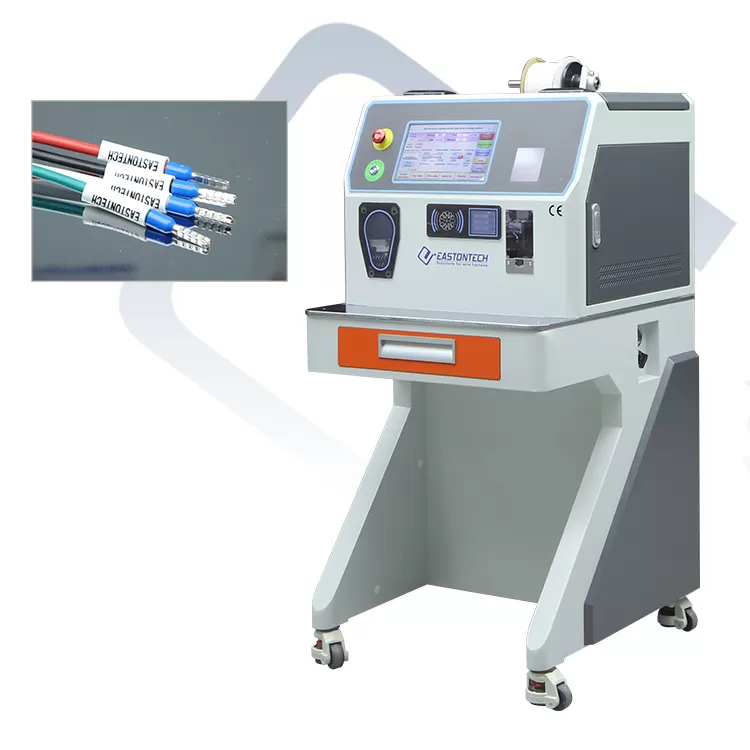
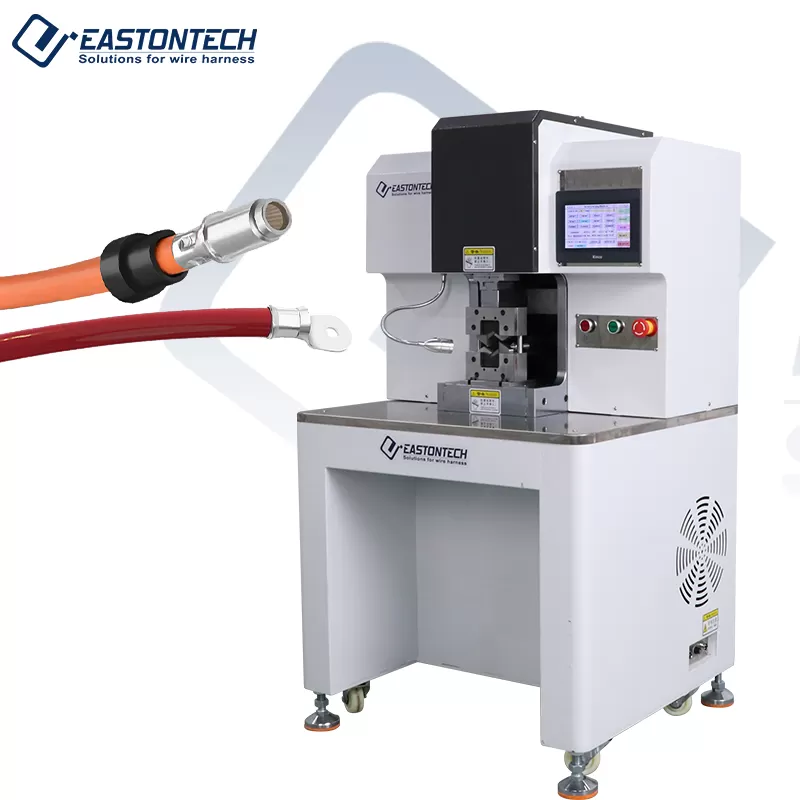
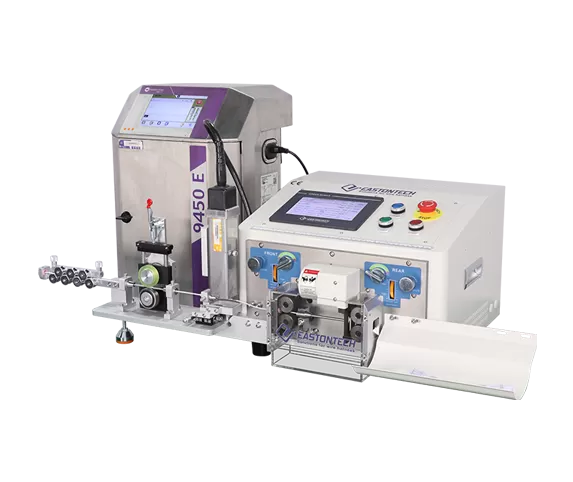
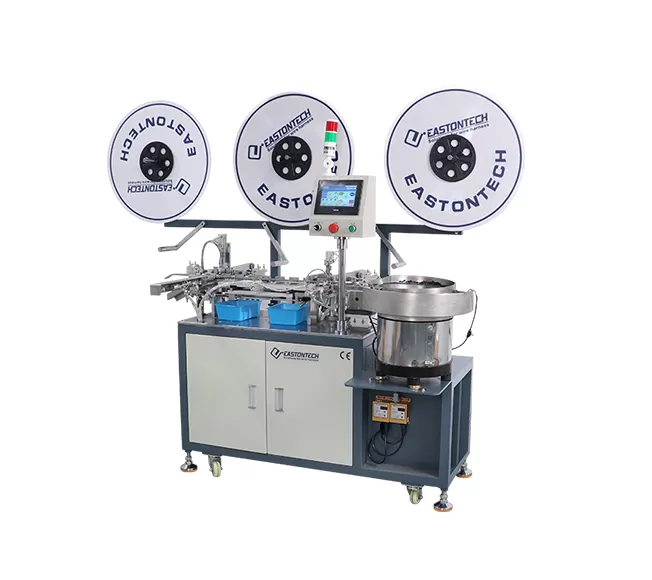
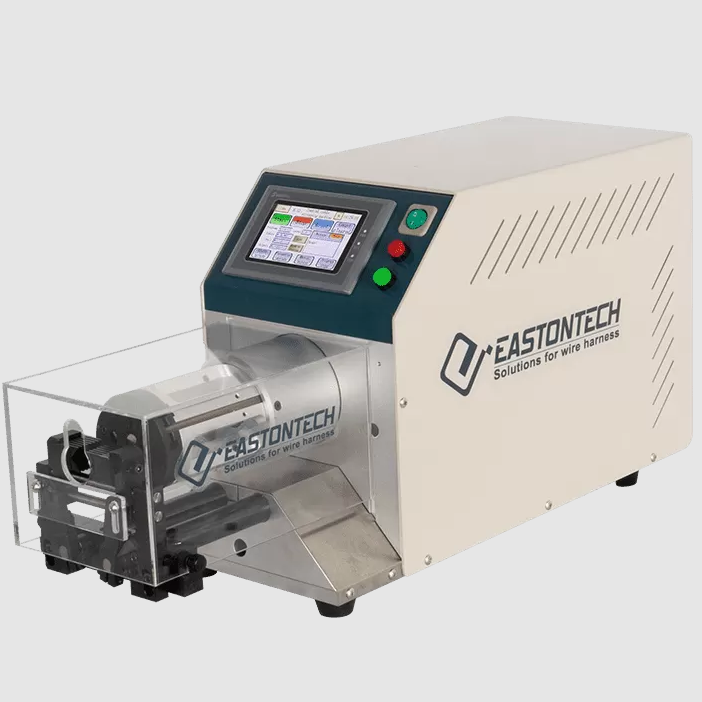
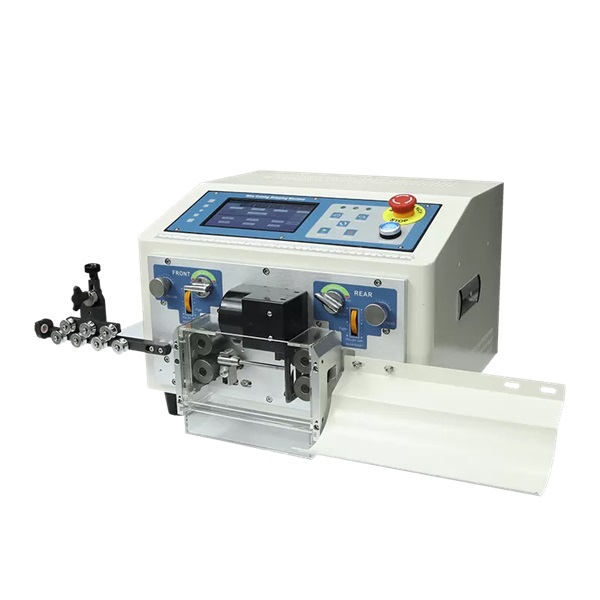
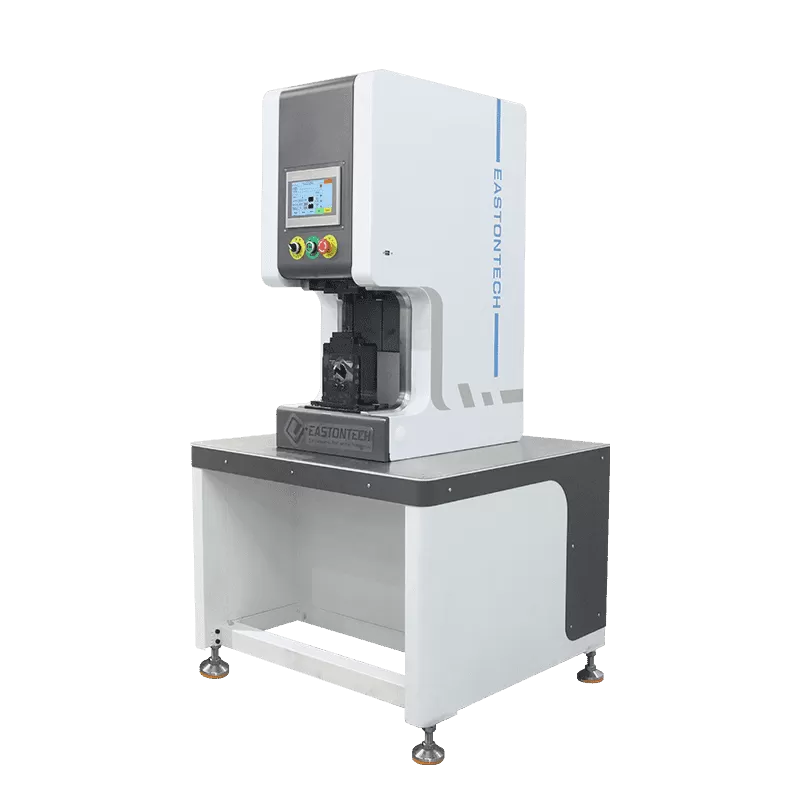
EV platforms push wiring harnesses harder than traditional vehicles — higher current density, tighter packaging, more sensors, and stricter safety requirements for high-voltage circuits. A "good enough" crimp can become a hotspot, an intermittent fault, or a costly warranty claim. That is why OEMs and Tier suppliers increasingly standardize on an auto crimping machine with repeatable force control, monitoring, and traceability. This guide explains the technical reasons and what to evaluate when choosing an automatic terminal crimping machine for EV battery and signal harness production.
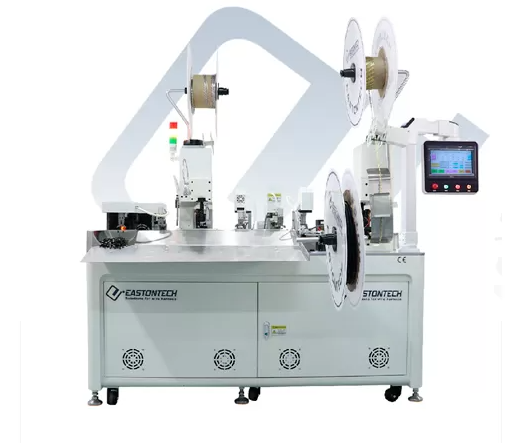
Automatic Terminal Crimping Machine Standards: Why EVs Have Tighter Quality Windows
What Changed with EV Harness Requirements
EV platforms introduced two demanding harness categories that conventional automotive production was not optimized for:
| Harness Type | Requirement | Failure Consequence |
|---|
| High-voltage battery cables | Low contact resistance at high continuous current | Hotspot at the terminal joint; thermal runaway risk in extreme cases |
| High-speed signal wires (CAN, LIN, Ethernet) | Consistent impedance; no micro-resistance variation | Communication errors; sensor dropout; diagnostic fault codes |
| High-density connectors | Precise terminal placement; consistent crimp in tight pitch | Connector rejection at assembly; field intermittent fault |
| Safety-critical circuits (airbag, ABS) | Zero tolerance for intermittent connection | Safety system failure; recall |
Why Crimp Quality Matters More in EVs
A conventional 12V automotive harness carries low current signals where small resistance variations have minimal consequence. An EV battery pack cable carrying 200A or more turns even a 1 mΩ excess contact resistance into meaningful heat generation. Over thousands of drive cycles with vibration, fretting corrosion at a marginal crimp progressively increases resistance until the connection fails.
Typical OEM expectations for EV harness crimping:
Crimp height and width within ±0.05 mm of specification
Pull force test minimum clearly defined per gauge/terminal combination
Process data logged per piece or per batch for traceability
Auto Crimping Machine Precision: Controlling Crimp Geometry and Strand Integrity
The Quality Outputs That Define a Good Crimp
| Crimp Parameter | What It Controls | Consequence If Out of Spec |
|---|
| Crimp height | Compression ratio of the crimped zone | Under-height = loose joint; over-height = strand damage |
| Crimp width | Lateral metal flow and conductor containment | Affects pull force and electrical contact area |
| Bell mouth | Smooth flare at the wire entry to the crimp | Sharp edge causes wire fatigue and eventual strand fracture |
| Conductor brush length | Amount of stripped conductor exposed beyond the crimp | Too long = short-circuit risk; too short = poor contact |
| Insulation support crimp | Secondary crimp on the insulation jacket | Provides strain relief; prevents conductor migration |
How Auto Crimping Machines Achieve Repeatability
| Machine Feature | How It Works | Quality Benefit |
|---|
| Servo-driven crimp press | Controlled ram travel and force profile | Consistent crimp height on every cycle regardless of operator |
| Calibrated applicators | Tooling set to specification with documented setup | Eliminates tool-to-tool variation between shifts and setups |
| Stable wire feeding | Encoder-controlled feed length | Consistent strip length and conductor brush |
| Temperature-controlled environment (where applicable) | Prevents thermal expansion effects on tooling | Critical for very tight tolerance high-volume production |
Defects That Precision Prevents
Over-crimp from excessive force: conductor strands are cut or damaged, reducing the current-carrying cross-section while the crimp appears tight
Under-crimp from insufficient force or worn tooling: high contact resistance from the first use; accelerates rapidly with vibration
Terminal deformation: visible on cross-section inspection; increases with incorrect tooling or off-center wire placement
Automatic Terminal Crimping Machine Monitoring: Crimp Force Analysis and Inline QC
Why Monitoring Is Non-Negotiable for EV Production
Visual inspection of a completed crimp cannot detect many critical defects. A terminal crimped over a wire with one missing strand looks identical to a correctly crimped terminal — but has lower pull force, higher resistance, and will fail earlier under vibration.
Crimp Force Analysis (CFA) detects:
| Detectable Anomaly | Physical Cause | Signal in Force Profile |
|---|
| Missing strand(s) | Conductor partially stripped or damaged before crimping | Lower peak force than reference; reduced area under curve |
| Wrong wire gauge | Incorrect wire loaded into the machine | Different force profile shape — detectable against reference envelope |
| Wrong terminal | Incorrect terminal loaded onto the applicator | Different force profile from the loaded reference |
| Partial terminal insertion | Terminal not fully seated in applicator | Asymmetric force signature |
| No wire (terminal only) | Wire feed failure | Force well below minimum reference threshold |
Inline QC Tools to Specify
| Tool | Function | Detection Capability |
|---|
| Crimp force monitor | Compares force profile to reference envelope on every crimp | Missing strands, wrong wire, wrong terminal |
| Vision system on terminal | Checks terminal geometry and position after crimp | Terminal deformation, wrong terminal type |
| Wire presence sensor | Confirms wire is present before crimp cycle initiates | Empty crimp prevention |
| Pull test station (inline) | Applies defined tensile force; measures pass/fail | Pull force verification at production rate |
Traceability for EV OEM Requirements
Batch or serial-linked data records confirming crimp force profile for each connection
Alarm thresholds that halt production on out-of-limit conditions — not just flag for review
Reject handling with physical separation and documented disposition
Export format compatibility with the customer's quality management system
4. Auto Crimping Machine Integration: Double-End Crimping and Heat Shrink Insertion
Why Integrated Processes Reduce Defects
Each time a partially processed wire is handled between separate machines or workstations, variability is introduced. Integrated auto crimping machine platforms that combine multiple operations in a single cycle reduce handling steps and the associated quality risk.
| Integrated Function | What It Does | Quality Benefit |
|---|
| Double-end crimping | Both ends of the wire are cut, stripped, and crimped in one machine cycle | Eliminates the second-end setup as a separate risk; consistent both-end quality |
| Heat shrink tube insertion | Shrink tube is threaded onto the wire before or after crimping and positioned for field installation | Eliminates manual tube handling; consistent tube position |
| Controlled shrink positioning | Tube length cut and positioned to a defined offset from the terminal | Prevents tube misplacement that leaves exposed conductor |
Application Examples in EV Harness Production
Battery module inter-cell sensor wires: small gauge, double-ended, heat shrink required for thermal protection
High-voltage interlock circuits: both ends crimped with specific terminal types; heat shrink provides additional insulation integrity
Signal harness ring terminals: consistent strip length and crimp height critical for CAN bus impedance
Engineering Compatibility Considerations
Heat shrink tube inner diameter must match the wire OD for proper positioning before shrink
Tube material selection (polyolefin, adhesive-lined, dual-wall) affects machine compatibility — confirm with the supplier
Cable flexibility affects feed and cut accuracy — stiffer cables require different feed roller pressure settings
Automatic Terminal Crimping Machine Buying Checklist
Quote-Ready Technical Requirements
| Parameter | What to Specify | Notes |
|---|
| Wire gauge range | AWG or mm² minimum and maximum | Defines the applicator range and feed mechanism requirement |
| Terminal types | Manufacturer and part number for each terminal used | Determines applicator tooling; one applicator per terminal family typically |
| Process requirements | Cut only, strip only, one-end crimp, double-end crimp, heat shrink insertion | Define every operation the machine must perform in a single cycle |
| Cycle time target | Pieces per hour at the required wire gauge and terminal combination | Defines servo speed and feed system requirement |
| Strip lengths | Lead end and lag end strip length in mm | Accuracy specification required |
| Cut lengths | Total wire length tolerance | ±1 mm or tighter for EV applications |
Tooling and Changeover
Confirm applicator compatibility with your terminal supplier — most applicators are terminal-specific
Request estimated changeover time for a terminal-to-terminal product change
Confirm calibration procedure for crimp height and the tooling life expectancy at your production volume
Acceptance Testing Plan
| Test | Method | Pass Criteria |
|---|
| Crimp cross-section | Destructive metallographic section of 5 samples per terminal/wire combination | Crimp height and width within drawing tolerance; no strand damage |
| Pull test | Tensile test per IPC/WHMA or OEM specification | Minimum force met; no terminal deformation |
| CFA baseline establishment | Run 50 pieces; establish reference force profile envelope | Envelope covers normal process variation; detects seeded defects (missing strand test) |
| Visual and dimensional | Measure strip length, brush length, and terminal position on 20 samples | All within specification |
Conclusion
EV reliability is built in the harness. High-accuracy crimping prevents heat generation, resistance drift, and intermittent signal faults that can trigger expensive diagnostics, field service events, and recalls. A modern auto crimping machine — especially an automatic terminal crimping machine with crimp force monitoring, inline QC, and traceability — helps manufacturers meet tight OEM requirements with consistent throughput across high-mix EV harness programs.
FAQ
Q1: Why is crimp accuracy critical for EV battery cables specifically?
EV battery cables carry high continuous current — 100–400A in many pack configurations. Even a small increase in contact resistance from a marginal crimp generates significant heat under load. That heat accelerates insulation degradation and oxidation at the joint, progressively increasing resistance and creating a failure cycle that can ultimately compromise battery safety.
Q2: What is crimp force analysis and why is it important for EV harness production?
Crimp force analysis monitors the force applied to the terminal throughout the crimp cycle and compares the profile to a reference envelope established during setup. Deviations from the reference — lower peak force, different slope, abnormal shape — indicate conditions like missing strands, wrong wire gauge, or wrong terminal that visual inspection cannot detect after the crimp is made.
Q3: What are the most common crimp defects in terminal crimping?
Under-crimp (insufficient compression, creating high contact resistance and low pull force), over-crimp (excessive compression cutting or breaking conductor strands), incorrect strip length (too long creates short-circuit risk; too short reduces contact area), poor insulation support crimp (allows conductor movement that causes strand fatigue), and terminal deformation from incorrect tooling or off-center wire placement.
Q4: Can one automatic terminal crimping machine handle both signal wires and high-current battery cables?
Some machines from Eastontech cover a wide gauge range, but high-current battery cables (6 AWG to 2/ AWG) require significantly higher crimp force capability and larger applicators than small signal wires (28–22 AWG). Most EV harness manufacturers use separate machine configurations for power and signal harness production rather than trying to cover the full range on one platform.
Q5: What information should I provide to get an accurate machine quotation?
Wire types and gauge range in AWG or mm², terminal manufacturer and part numbers for each terminal family, complete process requirements (cut-to-length, strip, single or double-end crimp, heat shrink tube insertion), target throughput in pieces per hour, required crimp force monitoring capability, traceability data requirements, and any OEM-specific acceptance criteria that must be built into the machine's QC logic.
 English