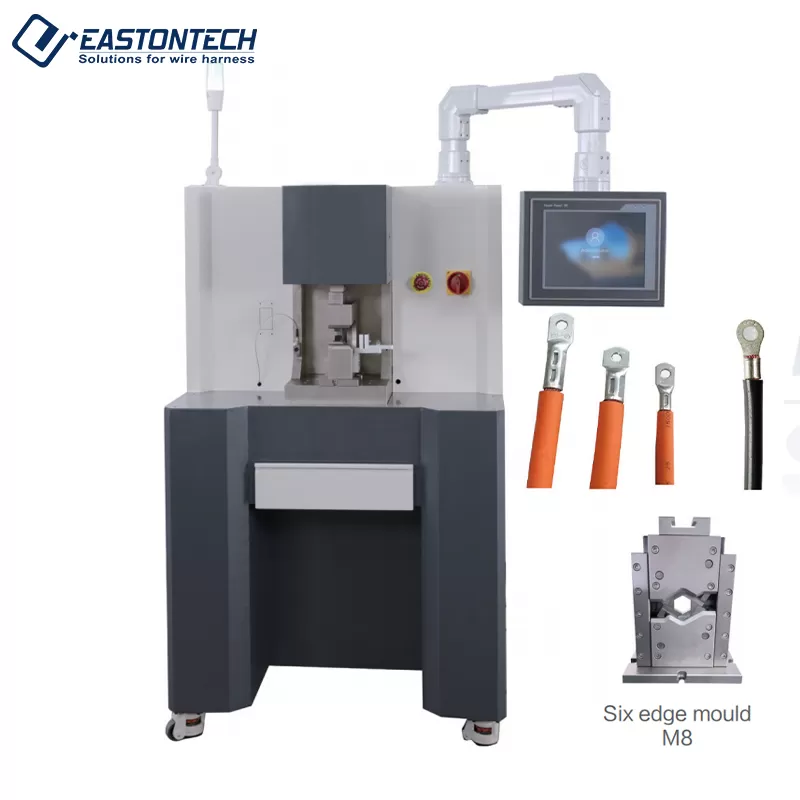
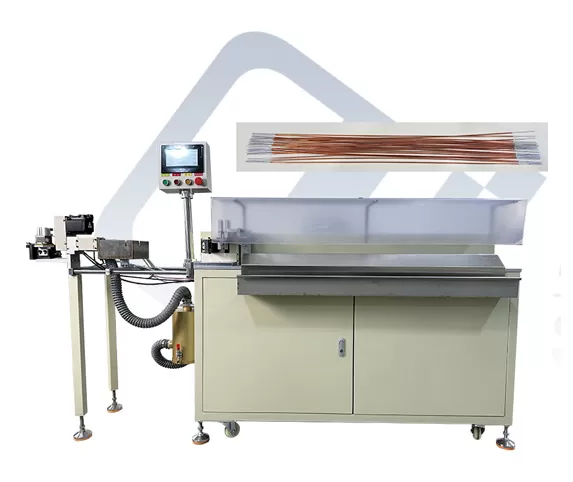
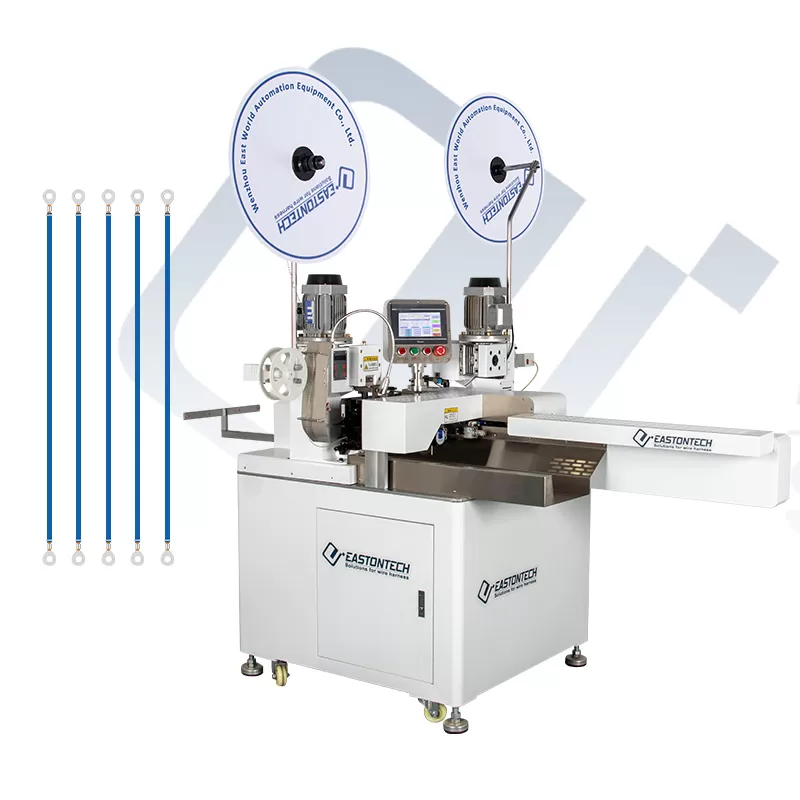
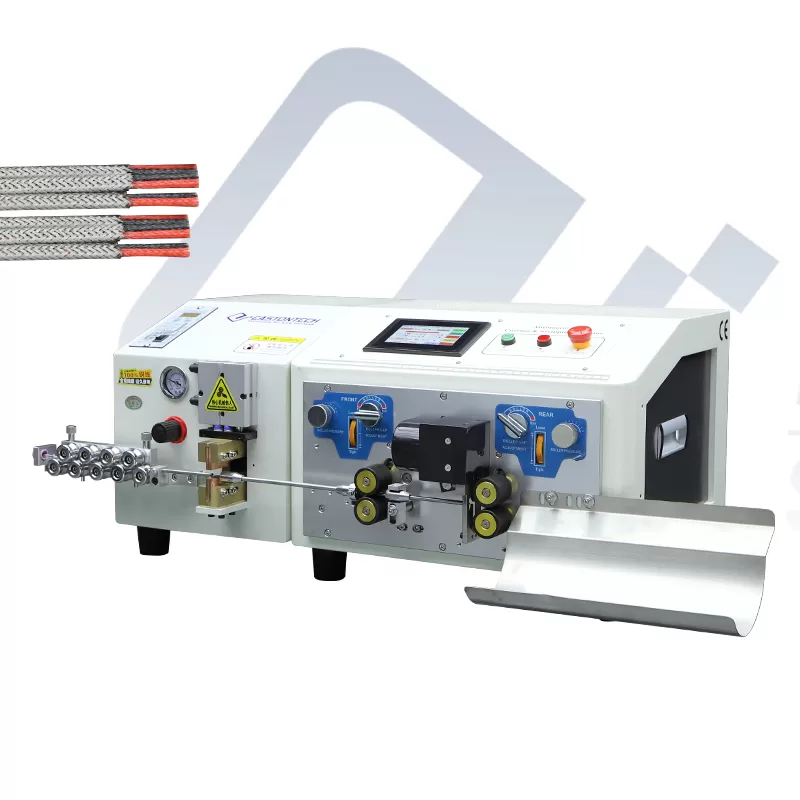
Many wire harness factories still operate with disconnected equipment islands: a standalone wire cutting machine on one bench, a separate stripping station down the line, and manual terminal crimping handled by a different operator at the end. The result is entirely predictable — low throughput, inconsistent crimp quality, elevated scrap rates, and chronic stoppages for rework and sorting. If your plant is still running this fragmented model, you are paying a hidden tax on every harness you produce.
The answer is a fully integrated wire sealing and crimping machine that consolidates cutting, stripping, seal loading, and terminal crimping into one controlled, repeatable cycle. When you model the real numbers — labor per output unit, scrap cost, rework hours, and downtime minutes — most factories find the upgrade pays back within 6 to 12 months, driven by capacity gains and quality improvement rather than headcount reduction alone.
This article walks through the working principle, the ROI model, key specifications, installation planning, and long-term TCO so you can build a credible business case for the transition.
Standalone Islands vs. Integrated Cells: How the Workflow Actually Changes
Understanding why integration matters starts with mapping every handoff in your current process.
The "Island" Workflow and Where It Bleeds Time
A typical standalone setup runs like this:
Cut → transfer → strip → transfer → manually load seal → position terminal → crimp → inspect → rework
Each arrow in that chain is a handoff. Each handoff introduces variation: a wire dropped on the floor, a strip length that drifted because the operator reset the machine, a seal loaded upside down, a crimp applied at the wrong height because the previous batch left the applicator slightly out of position. WIP queues build between stations. Operators wait on each other. When one station goes down for a blade change or a jam, the entire line stalls.
The hidden cost is not just the rework at the end — it is the micro-stops, the sorting time, the handling damage to fine-strand conductors, and the mental load on operators who are constantly compensating for upstream variation.
What an Integrated Sealing and Crimping Cycle Looks Like
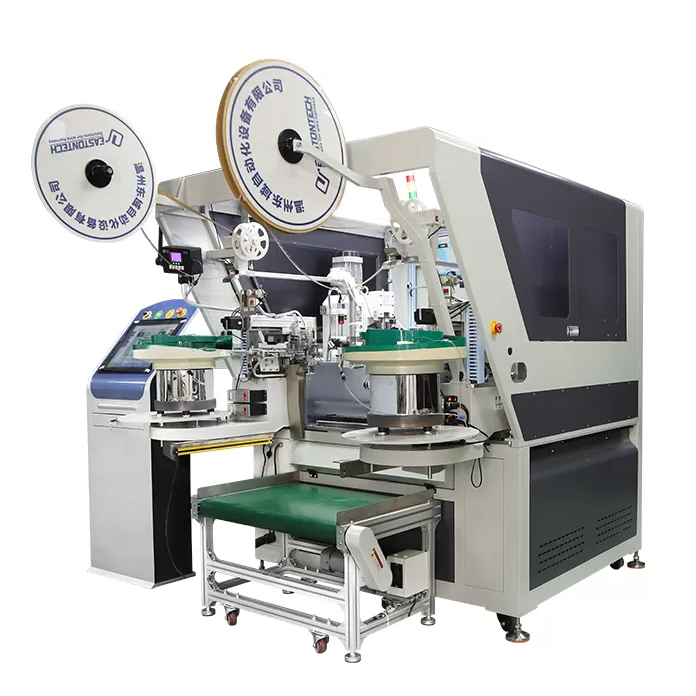
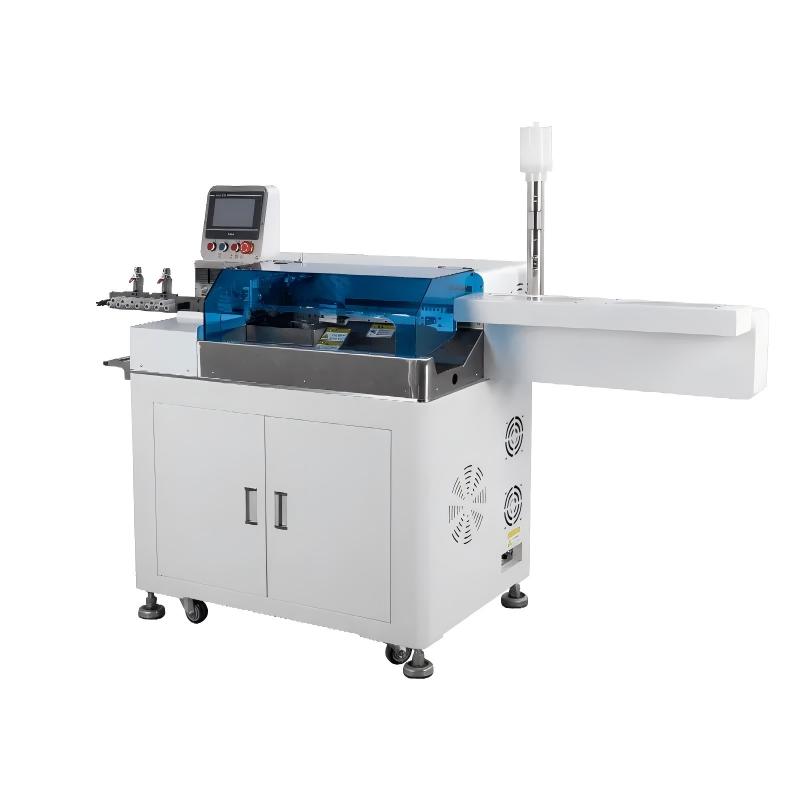
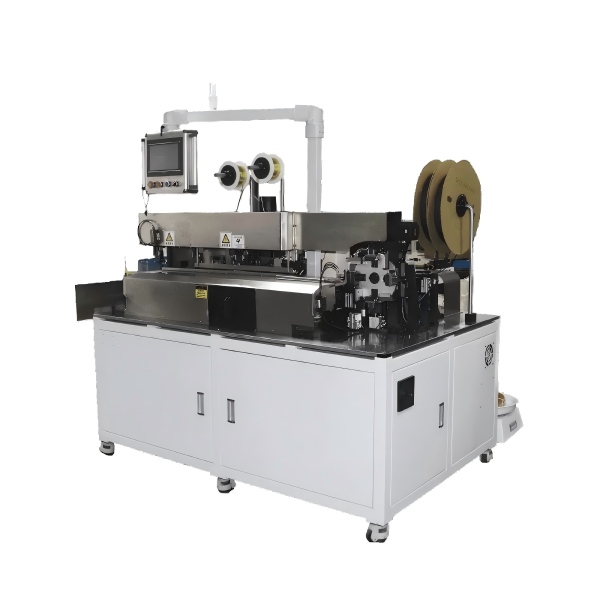
A fully automated wire cutting machine cell sequences the entire process without manual transfers:
Step 1 — Wire feeding: Servo-controlled feed wheel advances wire to the programmed cut length.
Step 2 — Cutting and stripping: Blades cut to length and strip both ends in the same station. Strip length and depth are set digitally and held repeatably across the full shift.
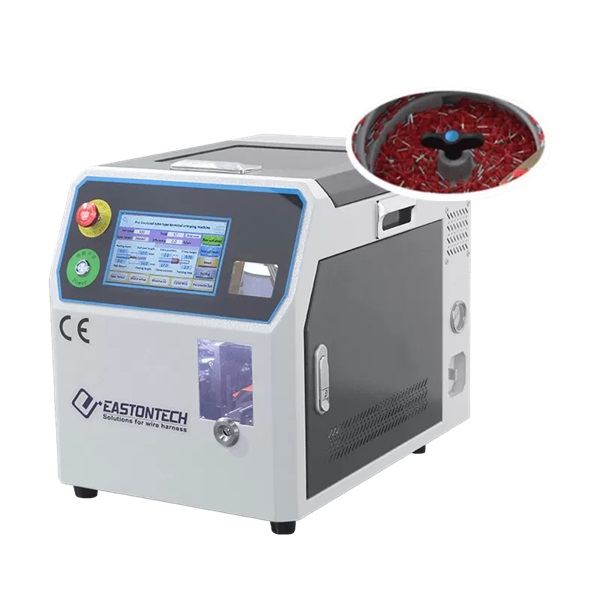
Step 3 — Seal insertion: A vibratory or belt feeder orients seals and loads them onto the stripped end. A sensor confirms seal presence before the wire advances.
Step 4 — Terminal crimping: The sealed end is positioned in the applicator. The press cycle applies the crimp. Crimp force monitoring flags any out-of-window event in real time.
Step 5 — Output collection: Finished leads drop into a sorted output tray, ready for sub-assembly.
Fewer touchpoints mean fewer opportunities for length errors, strand nicking, missing seals, and inconsistent crimp height. The process becomes measurable because every variable — feed length, strip depth, seal detection, crimp force — is controlled and logged in one system.
Explore the integrated wire sealing and crimping machine configuration
Speed on Paper vs. Real Throughput: Why Integration Wins the Shift
Standalone machine specs often look impressive in isolation. A cutting machine rated at 3,000 cuts per hour and a crimping press rated at 4,000 strokes per hour sound fast — until you account for what happens between them.
Cycle Time Is Not the Bottleneck. Handoffs Are.
Real productivity is determined by the slowest transfer in the chain, not the fastest individual machine. When an operator carries a tray of stripped wires from the stripping station to the crimping station, loads them one at a time, and repositions each wire by hand, the effective output rate collapses to whatever that manual step allows — typically 400 to 800 pieces per hour per operator, depending on wire gauge and seal complexity.
An integrated wire sealing and crimping machine removes those transfers entirely. The cycle time per lead is the machine cycle time, not the machine cycle time plus queue time plus handling time plus rework loop time.
Consistent Output Beats Peak Speed
The more important metric is stable output across a full shift. Standalone lines degrade over a shift as operators fatigue, blade wear accumulates without immediate feedback, and seal feeders jam without automatic detection. An integrated cell maintains consistent feed rate, strip quality, and crimp parameters from the first piece to the last because the control system holds those parameters — not the operator's attention level at hour seven.
Where Standalone Lines Lose the Most Time
Quantify your current losses honestly:
Mis-strips (nicked strands, wrong strip length): wire scrapped or reworked before crimping
Missing seals (not detected until electrical test): harness pulled from assembly, seal inserted manually, re-inspected
Wrong cut lengths (accumulated drift on manual reset): batch sorted, short pieces scrapped
Inconsistent crimp height (applicator not re-zeroed after changeover): pull-test failures, terminal waste, potential field returns
Each of these events costs time twice — once when it happens, and again when it is found downstream. Integration eliminates most of them at the source.
Building the ROI Case: Labor, Scrap, and Downtime in One Model
This is the section your finance team needs. The ROI argument for upgrading a wire cutting machine setup to an automated cell rests on three cost categories.
Labor Cost Per Output Unit
Standalone lines typically require one operator per station: one at the cutter, one at the stripping bench, one at the crimping press, and often a fourth doing sorting and rework. That is three to four labor units producing what an integrated cell produces with one operator monitoring the machine and managing material replenishment.
The ROI calculation is not "eliminate three operators." It is "redeploy three operators to higher-value assembly steps that are currently the real bottleneck." Capacity at the harness assembly stage often increases without adding headcount because the upstream process is no longer the constraint.
A simplified comparison across a standard 8-hour shift:
Standalone setup: 3 to 4 operators, 1,800 to 2,400 pieces, scrap rate 3 to 6%, rework 1.5 to 2.5 hours, handoff downtime 45 to 90 minutes
Integrated cell: 1 operator, 3,200 to 4,800 pieces, scrap rate below 1%, rework under 0.3 hours, downtime under 15 minutes
Scrap and Rework Material Cost
Terminal waste is often underestimated. A single mis-crimp wastes the terminal, the seal, and the wire end — and if it reaches electrical test, it wastes assembly labor too. At high-volume production of 10,000 or more leads per day, even a 2% reduction in defect rate translates to hundreds of terminals and seals saved daily. Multiply by terminal unit cost and annual volume, and the number becomes significant quickly.
Downtime and Micro-Stop Cost
Handoff-related stoppages — waiting for a tray to arrive, clearing a jam at the manual loading station, stopping to sort a mixed batch — are rarely tracked as downtime because no single event is long enough to log. But 45 to 90 minutes of accumulated micro-stops per shift, across two or three shifts, is 90 to 270 minutes of lost production per day. At a conservative output rate of 400 pieces per hour, that is 600 to 1,800 pieces of lost capacity daily.
Payback Target: 6 to 12 Months
The payback window closes faster than most plants expect because the gains compound across three streams simultaneously:
Higher throughput brings more harnesses per shift without adding headcount
Lower scrap delivers direct material cost reduction from day one
Fewer rework hours free labor for productive work and reduce sorting overhead
Use this framework to estimate your own payback window:
Current output per hour: ___ pieces
Current labor count for this process: ___
Current scrap rate: ___ %
Current rework hours per shift: ___ hours
Planned shifts per day: ___
Average terminal and seal cost per set: $___
Target output per hour with integrated cell: ___ pieces
Annual labor saving = labor delta × hourly rate × shifts × working days
Annual scrap saving = scrap rate delta × annual volume × material cost per set
Annual rework saving = rework hour delta × labor rate × shifts × working days
Payback period = machine investment ÷ total annual saving
Most factories running two or three shifts on high-volume connector families find the payback lands between 6 and 10 months when all three cost categories are included.
What to Specify Before You Buy: Key Parameters for a Wire Sealing and Crimping Machine
Procurement decisions fail when the specification is incomplete. Use this checklist before requesting a quotation.
Wire and Insulation Parameters
Conductor cross-section range in AWG or mm²
Insulation outer diameter, minimum and maximum
Insulation material such as PVC, XLPE, silicone, or TPE, which affects stripping method and blade selection
Any shielded or multi-core requirements
Cutting, Stripping, and Seal Requirements
Cut length range and tolerance, for example ±0.5 mm or ±1 mm
Strip length for both ends, strip depth, and acceptable strand damage threshold
Stripping method preference based on insulation type: rotary blade, thermal, or pull-off
Seal OD and ID range, seal material hardness, feeding method, and seal presence detection requirement
Terminal, Applicator, and Quality Assurance Details
Terminal type and connector family
Applicator compatibility with existing tooling or new applicators
Crimp height control approach: mechanical stop, servo press, or force monitoring
Crimp force monitoring requirement: go/no-go window or full curve logging
Pull-test sampling plan, barcode or traceability requirement, and data logging format for SPC or MES integration
Getting these parameters right before the quotation stage prevents costly change orders and delays in qualification.
From First Power-On to Full Production: Installation and Ramp-Up Without Chaos
Transitioning from a basic wire cutting machine setup to an integrated cell does not require a factory rebuild. It requires preparation and a structured qualification plan.
Installation Readiness
Before the machine arrives, confirm the following:
Power supply: voltage, phase, and amperage at the installation point
Compressed air: pressure and flow rate, most integrated cells require clean dry air at 5 to 7 bar
Floor space and layout: wire spool staging, output tray access, operator ergonomics, and maintenance clearance
ESD and cleanliness compliance if your connector family requires it
Material staging: wire reels, seal feeders loaded and labeled, terminal reels mounted and verified
Ramp-Up Plan: Qualify Fast, Qualify Right
Step 1: Select 2 to 3 high-volume part numbers as pilot SKUs. Choose parts with the highest current scrap or rework rate for maximum visible ROI.
Step 2: Confirm crimp standards. Document crimp height, pull force, and visual acceptance criteria before the first production run.
Step 3: Run capability validation. Measure cut length Cpk, strip length repeatability, seal detection rate, and crimp height distribution across a sample of 300 to 500 pieces.
Step 4: Train operators. Focus on material loading, alarm response, and daily checks rather than machine adjustment. The machine holds the parameters.
Step 5: Set standard changeover procedures. Document applicator swap steps, feeder changeover, and parameter recall so any trained operator can execute a changeover in under 15 minutes.
Changeover Strategy for Mixed-Model Production
Quick-change applicator systems and standardized feeder formats reduce changeover time between part numbers from 30 to 45 minutes on standalone lines to under 10 minutes on a well-configured integrated cell. This is critical for plants running 10 or more connector families across two shifts.
Maintenance and TCO: Keeping the Cell Profitable Over Its Full Life
Buying the machine is the beginning of the cost story, not the end. Total cost of ownership for an automated wire sealing and crimping machine is manageable when maintenance is treated as a production activity rather than a reactive event.
Preventive Maintenance Focus Areas
Cutting and stripping blades: Check every 50,000 to 100,000 cycles depending on wire type. Monitor edge condition, strip quality, and strand damage.
Seal feeder (bowl or belt): Check weekly for orientation rate, jam frequency, and sensor cleanliness.
Terminal applicator: Follow the applicator manufacturer's service interval. Monitor crimp height and anvil and punch wear.
Feed rollers and guides: Check monthly for grip consistency and surface wear.
Sensors (seal detection, crimp force): Calibrate monthly and verify false-positive and false-negative rates.
Lubrication points: Follow the OEM schedule to prevent wear on press and feed mechanisms.
Common TCO Drivers to Budget For
Blade consumables are the largest recurring cost. Blade life varies significantly by insulation hardness and conductor material.
Applicator wear parts including anvil and punch replacement are predictable if crimp count is tracked per applicator.
Vibratory bowl feeders require periodic track cleaning and amplitude adjustment as seal geometry varies between batches.
Most unplanned jams are caused by out-of-spec seals or terminals. Incoming material inspection reduces this significantly.
TCO Best Practices
A scheduled PM program combined with a defined spare parts kit and a daily operator checklist — a 5-minute visual and functional check at shift start — is the difference between a cell running at 85% OEE or above and one that drifts to 65% within six months. Centralized maintenance on one integrated cell is also simpler and cheaper than maintaining four separate standalone machines.
Conclusion
Standalone cutting, stripping, and manual crimping setups create costs that rarely appear on a single line in the P&L — but they accumulate in labor hours, terminal and seal waste, rework loops, and micro-stops that erode every shift. An automated wire cutting machine cell that integrates seal insertion and terminal crimping converts a fragmented, operator-dependent process into a controlled, repeatable cycle with measurable output and trackable quality.
When you model labor cost per output unit, scrap and rework material cost, and downtime minutes per shift together, the upgrade case becomes straightforward. Most factories running high-volume connector families on two or three shifts can justify the investment with a 6 to 12 month payback, driven by throughput gains and defect reduction rather than headcount cuts alone. The earlier you migrate your highest-volume SKUs, the faster the payback closes.
Request a Configuration and ROI-Based Quotation
Click through to the product page and submit your process details for an accurate recommendation:
Wire Sealing and Crimping Machine — View Configurations and Request a Quote
To receive a recommended configuration and payback model tailored to your operation, provide the following when you submit:
Work conditions: Current process steps, shifts per day, operator count per shift, current bottlenecks, and quality standards including crimp height spec and pull force requirement.
Quantity: Target units per day, number of lines or cells needed, and project timeline.
Size and spec: Wire AWG or mm², insulation OD range, cut length range and tolerance, strip lengths, seal OD and ID and material, terminal type, and applicator details.
Target metrics: Cycle time target, defect rate target, OEE target, and payback goal.
Current problem: High scrap rate, inconsistent crimp height, missing seals reaching test, frequent stoppages, labor shortage, or rework backlog.
The more detail you provide, the more accurate the configuration recommendation and ROI model will be.
FAQ
1. What is a wire cutting machine in a wire harness factory?
A wire cutting machine cuts wire to a programmed length and, in most configurations, also strips insulation from one or both ends. In a basic setup it operates as a standalone station. In an advanced integrated cell, the cutting and stripping function becomes the first stage of a coordinated process that also inserts seals and crimps terminals — turning a single-function machine into a complete lead-preparation cell.
2. How does an integrated wire sealing and crimping machine compare with separate cutting, stripping, and manual crimping stations?
The core difference is handoffs. Separate stations require physical transfer of wires between each step, which introduces length variation, handling damage, missing seals, and inconsistent crimp positioning. An integrated wire sealing and crimping machine executes all steps in one controlled sequence without manual transfers, which reduces defect opportunities at every stage and produces stable output across a full shift rather than peak output interrupted by rework loops.
3. How do you calculate ROI and payback period for an automated crimping cell?
Start with three cost categories. First, labor cost per output unit: compare current operator count to integrated cell operator count at the same or higher output. Second, scrap and rework material cost: calculate terminal, seal, and wire waste at current defect rate versus projected defect rate. Third, downtime cost: convert current micro-stop and rework minutes per shift into lost production units and multiply by margin per unit. Sum the annual savings across all three categories and divide by the machine investment. Most high-volume plants find payback within 6 to 12 months when all three categories are included.
4. Do we need to significantly modify our factory to install an integrated cell?
In most cases, no major construction is required. The standard requirements are a stable power supply at the correct voltage and amperage, clean dry compressed air at 5 to 7 bar, adequate floor space for the machine footprint plus material staging and maintenance access, and basic ESD or cleanliness compliance if your connector family requires it. The more significant adjustment is process standardization — documenting crimp acceptance criteria, changeover procedures, and daily check routines — which is a one-time setup effort that pays dividends in consistent OEE.
5. What parameters should we provide to get an accurate machine recommendation and quotation?
To size the right machine and build a credible ROI model, provide: wire conductor range in AWG or mm² and insulation OD range; cut length range and tolerance requirement; strip lengths and acceptable strand damage threshold; seal OD, ID, material hardness, and feeding preference; terminal type, applicator details, and crimp height specification; target throughput in pieces per hour or per shift; quality requirements including crimp force monitoring and pull-test plan; and your current scrap rate, rework hours per shift, and downtime data for ROI modeling.
 English