When you move into medical devices, wearables, and compact electronics, ultra-fine wires become the norm — and manual wire soldering quickly becomes the bottleneck. In real production, hand soldering on delicate conductors can easily pull or break fragile strands, or deposit too much solder and create an oversized tip that simply will not fit into small connector cavities. Both failure modes are costly: a broken core means the wire is scrapped, and an oversized tip means the harness fails at final assembly.
A purpose-built wire tinning machine addresses both risks simultaneously. By stabilizing the wire, controlling contact pressure, and precisely managing temperature and dwell time, it delivers consistent tinning geometry without damaging the fragile core — meeting the reliability standards that medical and wearable manufacturers cannot compromise on.
This article covers the failure mechanics, how automation solves them, key specifications, application fit, and TCO so you can evaluate the upgrade with confidence.
Why Ultra-Fine Wires Fail Under Manual Wire Soldering
Understanding the failure modes is the first step toward eliminating them. Manual wire soldering introduces three independent risk factors on every single piece — and on ultra-fine conductors, any one of them is enough to cause a reject.
Core Damage Comes from Force, Heat, and Handling
Mechanical stress is the most immediate risk. When an operator holds a fine wire against a soldering iron or dips it manually into a solder pot, the tension applied by hand — even a few grams of unintended pull — can snap or permanently stretch ultra-fine strands. At 36 AWG or finer, the conductor has almost no tolerance for axial force during the soldering moment.
Thermal overload is the second failure path. An uncontrolled iron tip or an unregulated solder pot temperature causes heat to dwell longer than necessary. On fine copper strands, excess heat weakens the conductor and can cause insulation to shrink back, crack, or discolor — creating a defect that may not be visible until electrical test or field use.
Inconsistent solder volume is the third problem. Without controlled immersion depth and dwell time, the amount of solder that wets onto the wire end varies with every operator and every piece. Too much solder forms a rounded bulb at the tip. That bulb blocks insertion into micro connector terminals, and the harness fails at the assembly stage — after all the upstream labor has already been spent.
What Automation Stabilizes
A wire tinning machine removes operator variability from all three failure paths at once. The wire is held in a fixed clamp at a controlled position. Immersion depth is set digitally and repeated identically on every cycle. Temperature is held at setpoint by a closed-loop controller. Dwell time is timed to the millisecond. The result is a tinned tip with consistent length, consistent diameter, and consistent wetting coverage — piece after piece, shift after shift.
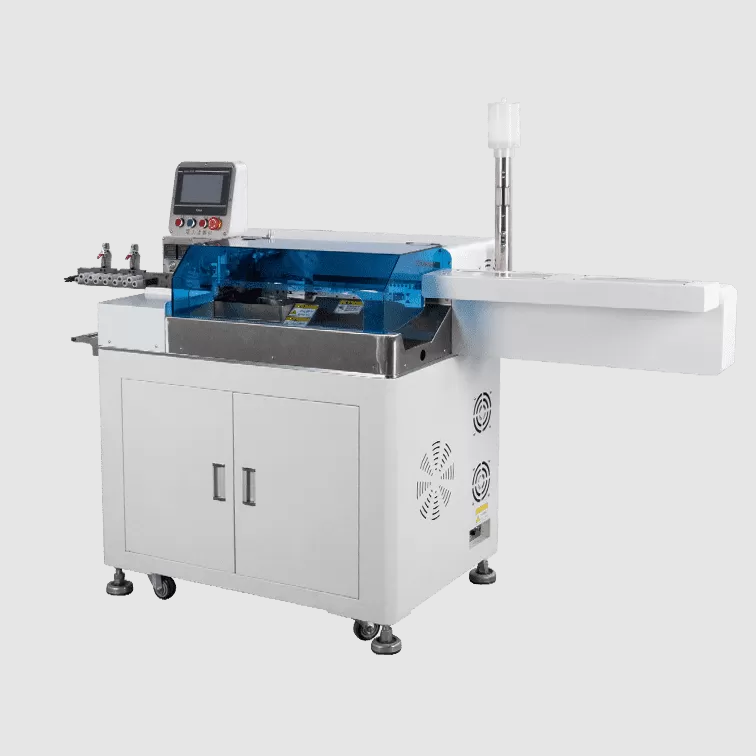
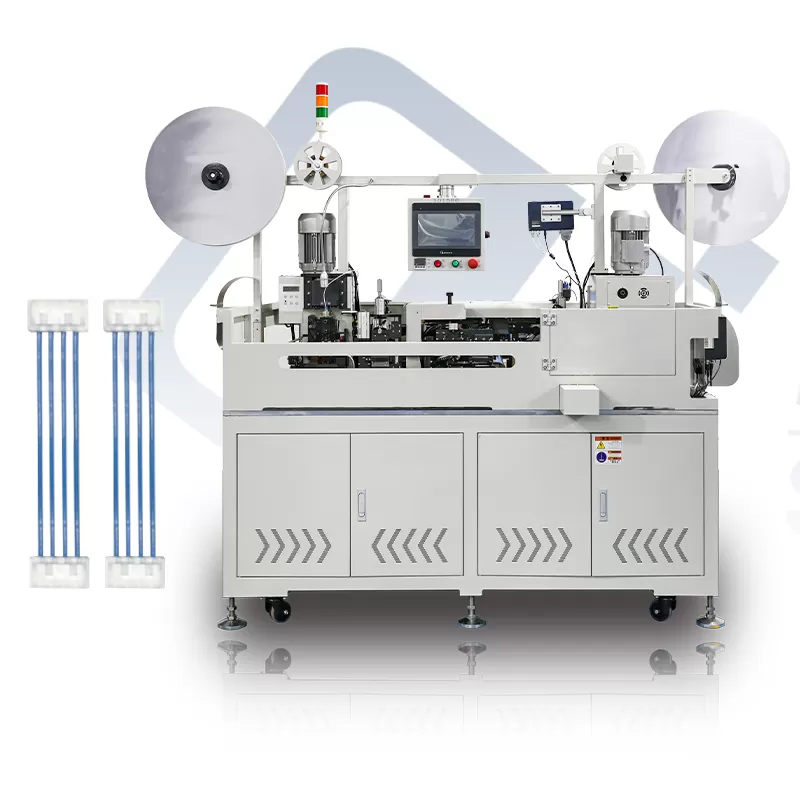
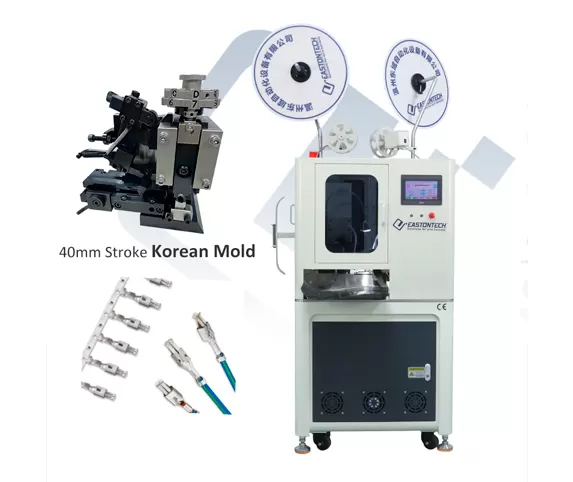
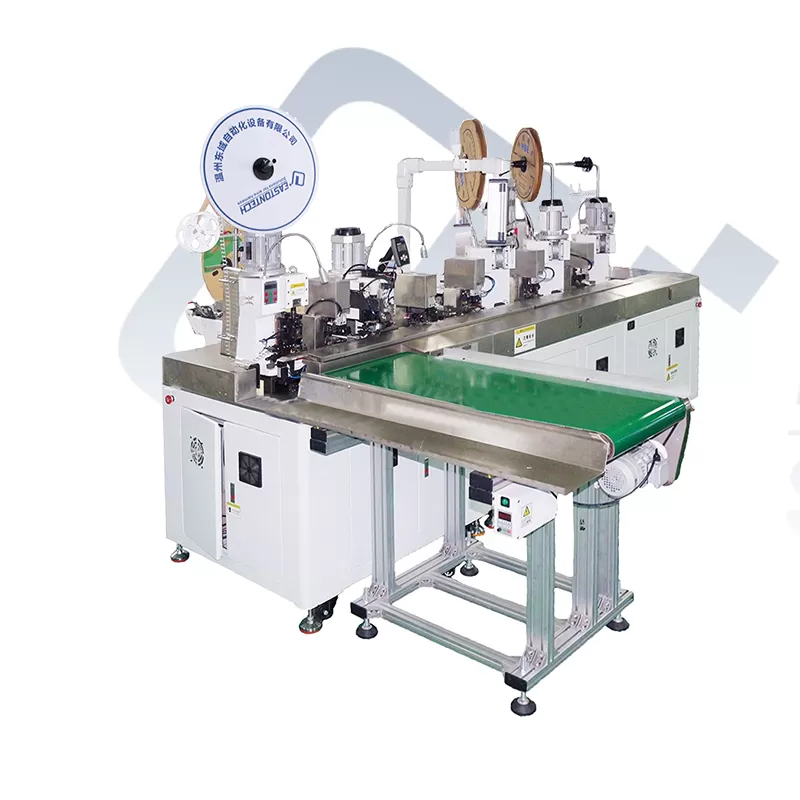
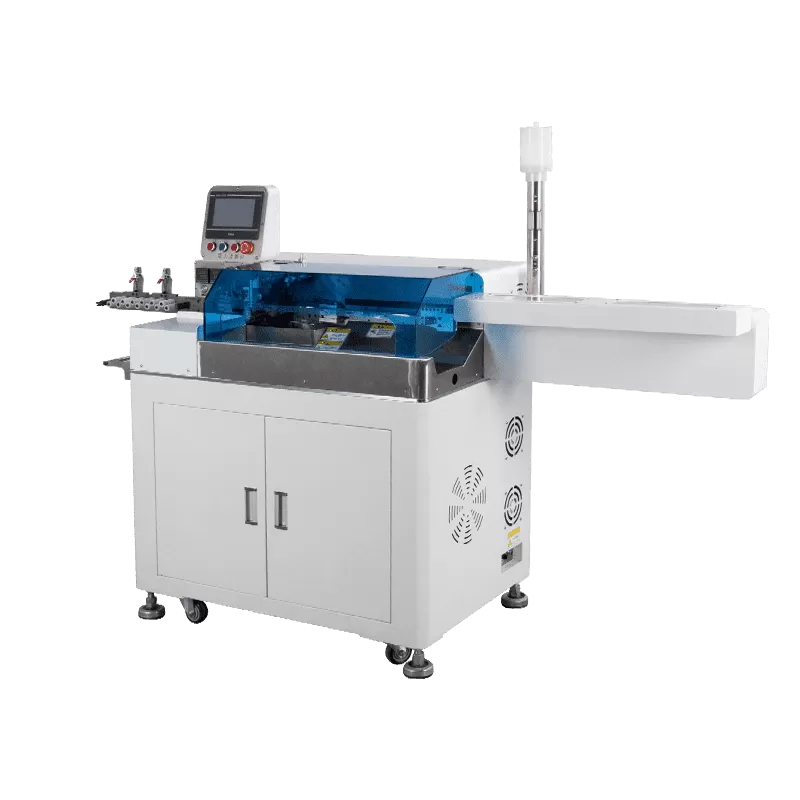
Explore the wire tinning and soldering machine configuration
How a Wire Tinning Machine Protects the Core While Delivering Connector-Ready Tips
The engineering advantage of a dedicated wire tinning machine over hand soldering is not just speed — it is the combination of micro-level controls that work together to protect the conductor while producing a tip geometry that fits the target connector.
Micro-Adjustable Clamping Pressure
The clamping system is designed specifically for fine and ultra-fine wire. Holding force is adjustable to the minimum needed to stabilize the wire without flattening the conductor cross-section or pulling strands during the immersion and withdrawal cycle. This is the control that manual soldering cannot replicate — a human hand cannot apply consistent, calibrated force on a 0.05 mm² conductor.
Precision Temperature Control
The solder pot temperature is held at a defined setpoint by a closed-loop thermal controller. This matters for two reasons. First, it prevents the thermal overload that weakens fine copper strands. Second, it maintains consistent solder viscosity and wetting behavior across the full production run — so the first piece of the shift and the last piece of the shift tin identically.
Controlled Dwell Time and Immersion Depth
These two parameters together determine solder volume on the tip. Immersion depth sets how much of the stripped end contacts the solder. Dwell time controls how long the contact lasts and therefore how much solder is drawn up by capillary action. By setting both parameters precisely and repeating them on every cycle, the machine limits solder volume to what is needed for reliable electrical contact — without building up the oversized bulb that blocks connector insertion.
Repeatable Flux and Solder Process
Flux application is integrated into the cycle, ensuring consistent coverage before immersion. This produces more uniform wetting and a cleaner, more consistent appearance compared to operator-dependent hand fluxing. For medical and wearable applications where visual inspection is part of the acceptance criteria, this consistency directly reduces sorting and rework time.
Why This Matters for Medical and Wearables
Ultra-fine wires, tight connector tolerances, and higher reliability expectations define both industries. A medical lead wire that breaks during assembly or a wearable harness with a tip that will not seat in its connector represents not just a scrap cost but a potential reliability risk in the field. Consistent tinning geometry and minimal thermal and mechanical damage are not optional in these segments — they are baseline requirements.
Specs That Decide Quality in Wire Soldering Automation
Procurement decisions fail when the specification is incomplete. Use this checklist before requesting a quotation for a wire tinning machine.
Wire and Insulation Parameters
Conductor cross-section range in AWG or mm², and strand count
Insulation outer diameter, minimum and maximum
Insulation material such as PVC, PTFE, silicone, or TPU — this affects the safe temperature window and clamping design
Any shielded, coaxial, or multi-core requirements
Tinning Length, Temperature, and Cycle Time
Required tinned length range and tolerance for the target connector or solder cup
Solder pot temperature range and stability requirement under continuous production load
Cycle time target in pieces per hour and multi-shift readiness
Fixturing, Solder Pot, and Quality Options
Clamping design suitability for ultra-fine wires: confirm no nicking, no strand pull-out, and no conductor flattening
Solder type compatibility (leaded or lead-free), flux method (foam, wave, or spray), and dross management approach
Recipe storage for multiple part numbers, dwell-time presets, and temperature deviation alarms
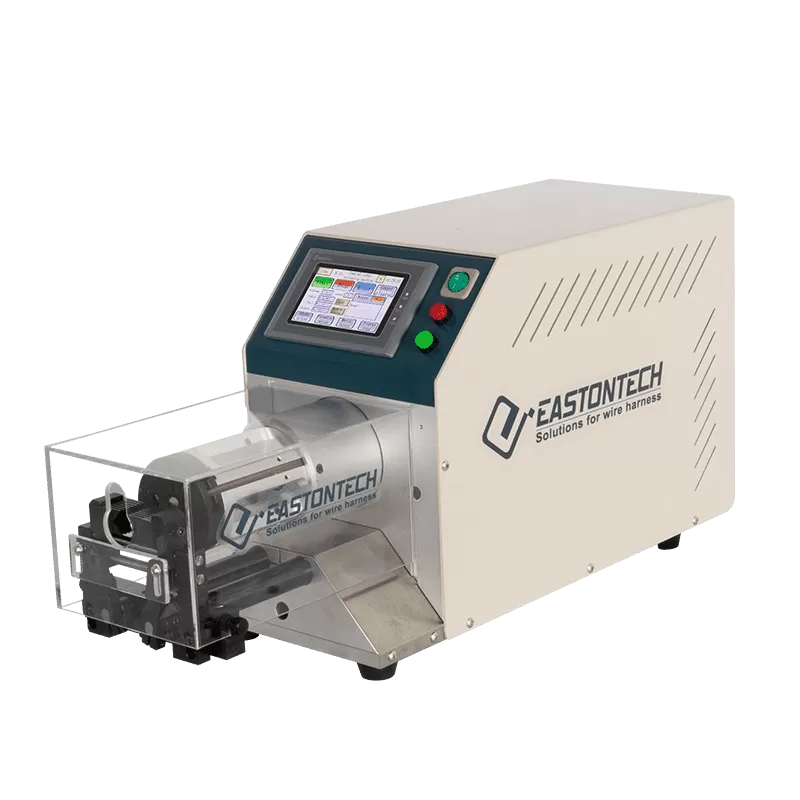
If your process also requires stripping before tinning and you want both operations in one unit, the combined stripping and tinning platform is worth evaluating:
EW-22F Automatic Wire Stripping and Tinning Machine
Where Advanced Wire Soldering Delivers the Biggest Production Gains
Not every application pushes the limits of manual soldering. But in the following segments, the gap between hand soldering and automated wire tinning is wide enough to directly affect yield, throughput, and product reliability.
Medical Devices
Fine lead wires in diagnostic equipment, implantable device cables, and patient monitoring harnesses require consistent tinning geometry and zero tolerance for core damage. Regulatory traceability requirements also favor recipe-based, logged processes over operator-dependent technique.
Smart Wearables
Small connectors, tight cavity clearance, and high aesthetic requirements make oversized solder tips a chronic reject source in wearable production. Automated tinning eliminates the tip geometry variation that causes insertion failures and cosmetic rejects.
Micro Harnesses for Consumer Electronics
High-volume production of fine-pitch harnesses for earbuds, compact cameras, and portable devices benefits from the cycle time consistency and low defect rate that automated wire soldering provides. Consistent tinning also improves downstream crimp and solder termination reliability.
R&D to Mass Production Scaling
Recipe-based repeatability is particularly valuable when transferring a process from an engineering bench to a production line. The machine holds the validated parameters — temperature, dwell time, immersion depth — so line operators reproduce the qualified result without needing the same skill level as the development engineer.
Installation, Validation, and TCO: Reducing Scrap and Returns with a Wire Tinning Machine
Setup and Process Validation
Before running production, define the acceptance criteria for tinning geometry:
Tinned length: minimum and maximum in mm
Tip diameter: maximum OD that fits the target connector cavity
Wetting coverage: minimum percentage of the stripped surface
Insulation condition: no shrinkage, discoloration, or damage at the insulation boundary
Run a short design of experiment varying temperature and dwell time across the expected production range. The goal is to find the parameter window that achieves full wetting without building up excess solder volume. Document the validated recipe and lock it for production use.
TCO and ROI Drivers
Less scrap from broken cores: Controlled clamping eliminates the mechanical stress that snaps ultra-fine strands during manual soldering. Fewer broken wires means fewer scrapped assemblies and less material waste.
Fewer connector-fit rejects: Controlled immersion depth and dwell time keep tip diameter within the connector cavity limit. Rejects at the assembly stage drop significantly.
Less rework and inspection sorting: Consistent wetting and tip geometry reduce the manual touch-up and visual sorting that consume labor hours on manual soldering lines.
Lower training dependency: Recipe storage means a new operator runs the same validated process as an experienced one. Training time drops and process stability does not depend on individual skill retention.
Simpler after-sales support: For equipment distributors and integrators, standard recipes and controlled parameters reduce customer complaints tied to technique variation — a significant advantage when supporting medical and wearable customers with strict process documentation requirements.
Conclusion
Ultra-fine wires make manual soldering genuinely risky: slight pulling force during hand soldering can damage or break the core, while uncontrolled solder volume creates tips that will not fit into micro connector cavities. Both failure modes are expensive — in scrap, rework, and downstream assembly failures. An advanced wire tinning machine standardizes clamping pressure, solder pot temperature, and dwell time so wire soldering becomes a controlled, repeatable process. For medical device and wearable manufacturers where reliability is non-negotiable and connector tolerances are tight, that repeatability is not a convenience — it is a production requirement.
Request a Configuration and Quotation
Click through to the product page and submit your process details for an accurate recommendation:
Wire Tinning and Soldering Machine — View Configurations and Request a Quote
To receive a recommended configuration tailored to your wire type and production requirements, provide the following when you submit:
Work conditions: Industry (medical, wearables, consumer electronics), operator skill level, shifts per day, ESD or cleanliness requirements, and any regulatory or traceability standards that apply.
Quantity: Target pieces per day, number of lines or stations needed, trial quantity if applicable, and delivery timeline.
Size and spec: Wire AWG or mm², strand count, insulation OD and material type, required stripping length, required tinning length, and maximum allowable tin tip diameter for the target connector cavity.
Target metrics: Acceptable core break rate, maximum solder tip OD, wetting coverage standard, cycle time target, and defect rate target.
Current problem: Broken cores during soldering, oversized solder tips blocking connector insertion, inconsistent wetting, insulation damage, or high rework and sorting labor.
The more detail you provide, the more accurate the configuration recommendation will be.
FAQ
1. What is wire soldering (tinning) in wire harness production?
Wire soldering, often called wire tinning in harness production, is the process of coating stripped wire strands with a thin layer of solder. The purpose is to improve electrical conductivity at the termination point, prevent individual strands from fraying during assembly, and prepare the wire end for reliable insertion into a connector terminal or solder cup. In automated production, a wire tinning machine controls the solder pot temperature, flux application, immersion depth, and dwell time to produce consistent tinning geometry on every piece.
2. How does a wire tinning machine compare with hand soldering?
Hand soldering depends entirely on operator technique. On ultra-fine wires, the uncontrolled tension, heat dwell, and solder volume that vary between operators and between pieces cause core breakage, insulation damage, and oversized tips. A wire tinning machine controls all three variables — clamping force, temperature, and dwell time — and repeats them identically on every cycle. The result is more consistent tinning geometry, lower defect rates, and less dependence on individual operator skill.
3. What ROI and payback can automation deliver for wire soldering?
Payback comes from four sources: reduced scrap from broken cores and connector-fit rejects, less rework and manual sorting labor, faster and more stable cycle time, and lower training cost. The payback window depends on your current defect rate, wire volume, and labor cost, but plants running high volumes of fine wire — particularly in medical and wearable segments where rejects are expensive — typically see payback within a few months of full production deployment.
4. Do we need to modify our production line to add an automatic wire tinning machine?
In most cases, the changes are minimal. You need bench space, the correct power supply, and a basic process validation run to confirm the temperature and dwell time recipe for your wire type. If your current process uses a separate stripping station upstream, you will need to confirm that the stripped length and quality are compatible with the tinning machine's clamping and immersion system. If you want stripping and tinning in a single unit to eliminate that handoff entirely, a combined machine is available and worth evaluating for your wire range.
5. What parameters should we provide to get an accurate machine recommendation and quotation?
Provide the following: wire conductor size in AWG or mm² and strand count; insulation material and outer diameter; required stripping length and tinning length with tolerances; maximum allowable tin tip diameter based on your connector cavity; solder type preference (leaded or lead-free) and flux method; target throughput in pieces per hour or per shift; and your current defect data including core break rate, oversized tip reject rate, and rework hours per shift. This information allows the supplier to recommend the correct clamping design, temperature range, and cycle configuration for your specific wire and connector combination.
 English