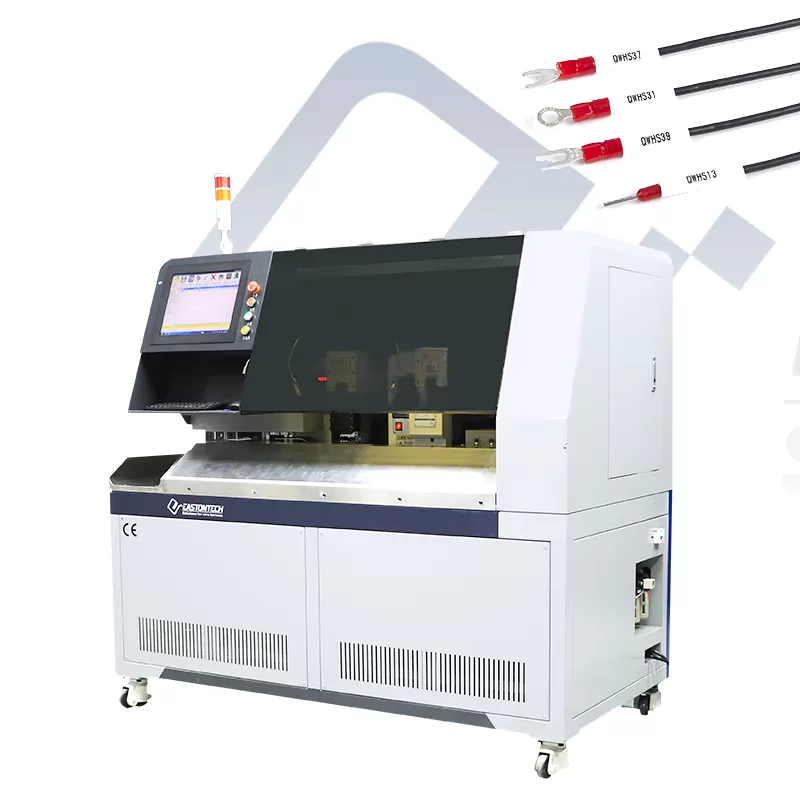
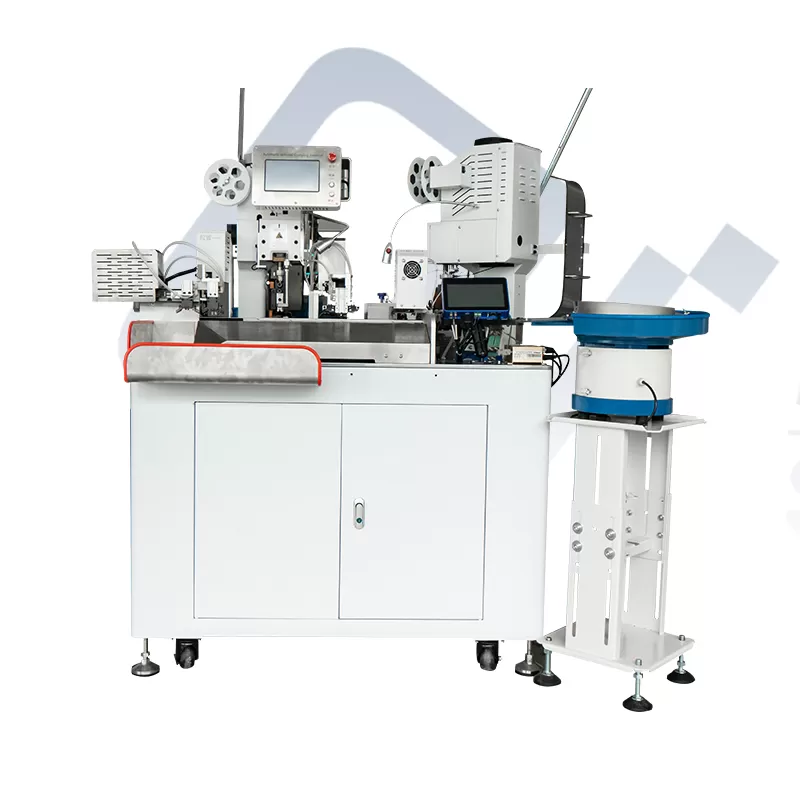
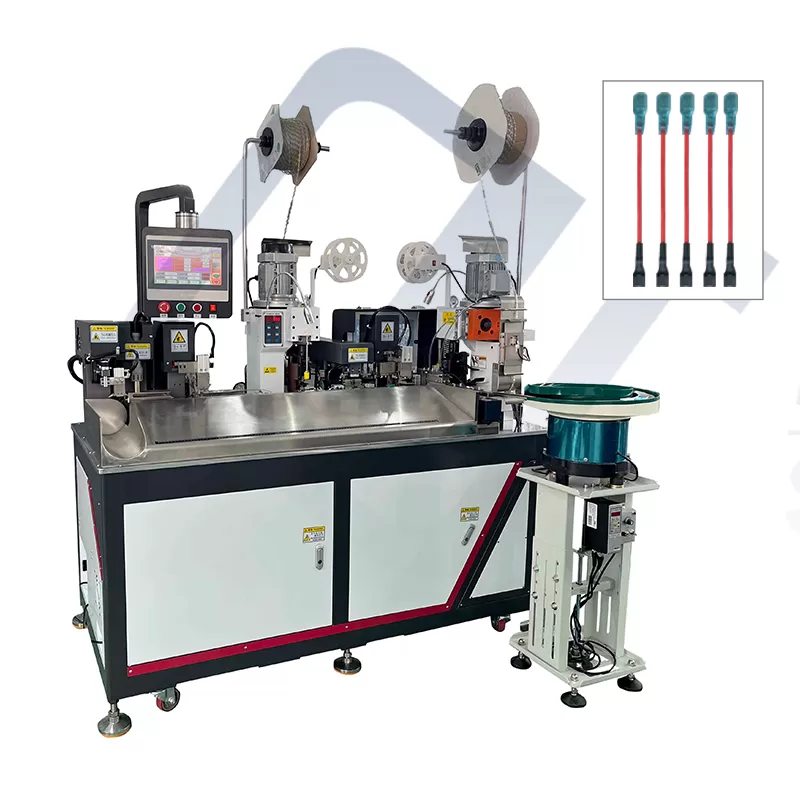
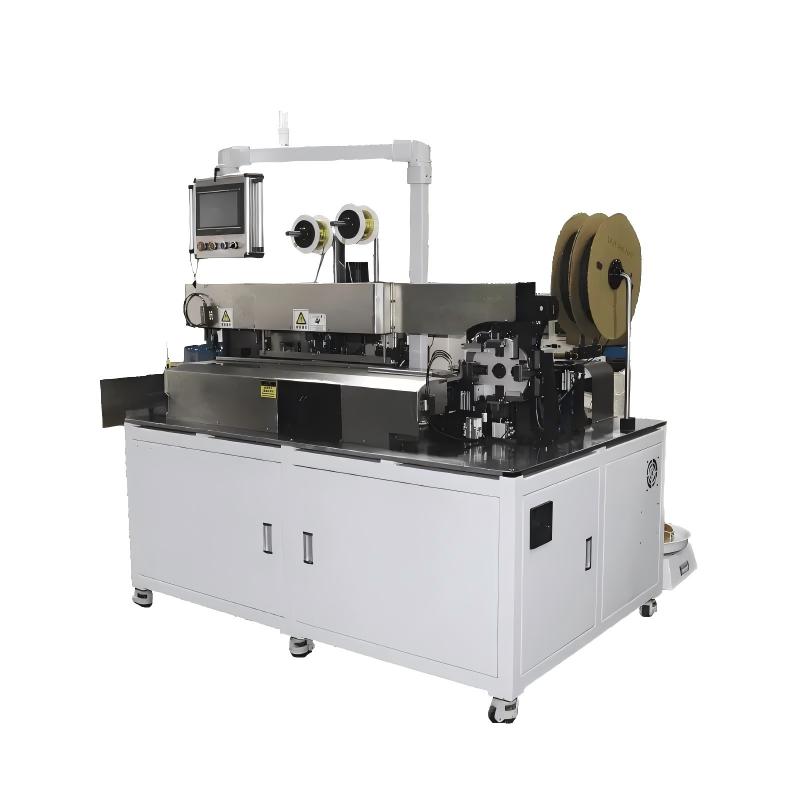
A terminal crimp machine improves crimping consistency by controlling the mechanical variables that determine the quality of each termination, including wire positioning, terminal feeding, crimp height, tooling alignment, and crimping force. Instead of relying on an operator to reproduce the same movement throughout an entire production shift, an automated system establishes a repeatable crimping cycle and maintains the selected process conditions with much less variation.
For wire harness manufacturers, this consistency is more important than simply increasing output. A terminal connection needs to achieve the required mechanical retention, electrical performance, and dimensional characteristics. When the crimping process fluctuates, even slightly, manufacturers may experience inconsistent pull-force results, increased inspection requirements, higher rework rates, or defective harnesses reaching downstream assembly.
Eastontech applies this process-oriented approach to automated wire processing. By coordinating wire feeding, stripping, terminal positioning, crimping, and quality-control functions, an automated system can reduce the operator-dependent variables that are difficult to control in repetitive manual production.
Why Is Crimping Consistency Critical in Wire Harness Production?
A crimped terminal is created through the interaction of the conductor, terminal, crimping tooling, and machine. The terminal barrel has to be compressed around the conductor with the correct geometry, while the conductor itself needs to be positioned correctly inside the terminal before the crimping stroke begins.
This means that a successful crimp cannot be judged only by whether the terminal appears to be attached to the wire. The conductor position, compression level, terminal deformation, insulation support, and mechanical retention all contribute to the finished connection.
In high-volume production, process variation becomes particularly important. A small deviation that seems insignificant on an individual terminal can become a major quality issue when the same operation is repeated thousands or millions of times. If one shift produces slightly different results from another, the manufacturer may also have difficulty maintaining consistent quality across the entire production organization.
Crimping consistency therefore needs to be treated as a manufacturing-process objective. The machine should not merely complete the crimping motion; it should help maintain the conditions under which the validated crimp is repeatedly produced.
How Does a Terminal Crimp Machine Improve Crimping Accuracy?
The primary advantage of automation is repeatability. Manual crimping requires an operator to position the wire and terminal correctly and operate the tool consistently for every connection. Even with experienced personnel, slight differences in hand positioning, insertion depth, timing, and operating rhythm are difficult to eliminate completely.
An automated machine replaces much of this repetitive variation with controlled mechanical movement. The wire is fed to a defined position, the terminal is presented to the tooling, and the crimping mechanism completes the operation according to the programmed or mechanically established process.
This creates a more stable relationship between the input materials and the finished crimp. Once the correct wire, terminal, applicator, crimper, anvil, and operating parameters have been validated, the machine can reproduce the same basic sequence throughout a production run.
The benefit becomes even more noticeable when several production shifts are involved. Instead of relying on each operator to reproduce a preferred technique, the machine provides a common mechanical process that can be followed across different shifts.
What Factors Determine Crimping Consistency?
Crimping consistency is influenced by several variables that work together. Wire size determines the amount of conductor material that must be accommodated by the terminal. Insulation diameter affects the insulation-support portion of the terminal, while strip length determines how much conductor is available for insertion.
Terminal position and wire insertion depth then determine where the conductor sits in relation to the crimp barrel. The crimper and anvil control how the terminal is compressed, while machine settings determine the movement and force applied during the cycle.
Because these variables interact, adjusting one parameter without considering the others can produce misleading results. For example, changing crimp height may alter conductor compression, but it cannot correct an incorrectly positioned wire. Similarly, increasing machine force cannot compensate for a terminal that is not correctly aligned with the tooling.
| Process Variable | Influence on Crimp Quality | Recommended Control |
|---|
| Wire size | Determines conductor volume and terminal compatibility | Verify wire and terminal specifications |
| Insulation diameter | Affects insulation support and terminal fit | Confirm compatibility before production |
| Strip length | Controls conductor exposure and insertion condition | Program and periodically measure |
| Wire insertion depth | Determines conductor position inside the terminal | Control wire feeding and positioning |
| Crimp height | Defines finished crimp geometry | Measure against the validated specification |
| Crimp force | Reflects resistance during terminal forming | Monitor where required |
| Tooling condition | Influences dimensional repeatability | Inspect and maintain regularly |
Why Is Crimp Height Important for Consistent Terminal Crimping?
Crimp height is one of the most practical dimensional indicators used to evaluate a terminal crimp. It represents the finished height of the compressed crimp section and provides a measurable indication of how the terminal has been formed around the conductor.
The correct crimp height depends on the terminal design, conductor size, wire construction, terminal material, and tooling. It should therefore be established from the applicable technical specification rather than copied from another terminal or treated as a universal machine setting.
If the crimp height is too large, the conductor may not receive sufficient compression. If it is too small, excessive compression may affect the conductor strands or alter the intended terminal geometry. Both situations can create quality risks even when the terminal appears visually acceptable.
For this reason, crimp height is especially useful during initial machine setup and process validation. It is also valuable during periodic production checks because gradual changes can indicate tooling wear, alignment problems, or other forms of process drift.
Can Crimp Force Monitoring Improve Crimping Consistency?
Crimp-force monitoring can add another layer of control by observing the force generated during the crimping cycle. A stable process generally produces a repeatable force pattern. When material conditions, wire positioning, terminal feeding, or tooling condition changes, the force curve may also change.
This makes force monitoring useful for detecting abnormal cycles during production. A missing or incorrectly positioned terminal, an unexpected material condition, an incorrect wire size, or a tooling problem may create a force response that differs from the established process range.
The major advantage is timing. Instead of discovering a problem after a large production batch has been completed, the manufacturer can identify an abnormal condition while production is still running.
Crimp-force monitoring should nevertheless be viewed as part of a broader quality system. It does not replace dimensional inspection or mechanical testing. Crimp height provides information about finished geometry, while pull-force testing evaluates mechanical retention. Force monitoring adds information about what happened during the forming cycle itself.
How Does Automatic Wire Feeding Improve Crimping Consistency?
Wire feeding has a direct effect on crimp quality because the conductor must reach the terminal at the correct position and insertion depth. If the wire moves differently from one cycle to the next, the crimping mechanism may remain perfectly repeatable while the finished termination still varies.
This is particularly important when processing smaller conductors. A relatively small change in wire insertion depth can significantly alter the position of the conductor inside the terminal barrel.
An automatic feeding system helps reduce this variation by controlling wire movement through the processing path. Depending on the machine configuration, the system may also include wire straightening and controlled feeding to minimize lateral movement or inconsistent tension.
Manufacturers evaluating automated equipment should therefore consider feeding accuracy as carefully as crimping force. A powerful crimping mechanism cannot compensate for unstable wire positioning.
How Does Terminal Positioning Influence Crimp Quality?
The terminal needs to reach the crimping station in a consistent position before the crimping stroke begins. If the terminal is shifted, tilted, or incorrectly presented, the crimper may not compress the intended section of the barrel.
Automatic terminal feeding and applicator systems reduce this variation by creating a defined path for terminal presentation. Instead of manually positioning every terminal, the feeding mechanism delivers the component to a controlled location.
However, automated feeding does not mean that the system can be ignored after installation. Feeding components can wear over time, material debris can accumulate, and alignment can change after extended operation. Regular inspection remains necessary to ensure that terminal presentation stays within the validated process condition.
What Role Does Tooling Alignment Play in Crimp Consistency?
Tooling is one of the most important elements in the crimping process because it determines how mechanical force is transferred into the terminal. The crimper and anvil must be correctly matched to the terminal design and properly aligned with the applicator.
Misalignment can result in uneven compression, changes in crimp geometry, or an inconsistent terminal profile. Tooling wear can create a similar problem gradually. Unlike a major machine failure, wear may not immediately stop production. Instead, the process can slowly move away from the original validated condition.
This makes tooling maintenance a quality-control issue rather than simply a maintenance task. The condition of the crimper, anvil, applicator, locator, and related components should be monitored according to production requirements.
Manufacturers should also consider tooling changeover when evaluating equipment. If several terminal types are used, quick and repeatable tooling changes can help reduce setup variation between products.
Does Wire Stripping Affect the Consistency of the Final Crimp?
Yes. Stripping is closely connected to crimping because it determines the conductor length available for terminal insertion.
If the strip length is too short, insulation may enter an area intended for conductor compression. If it is too long, the finished termination may contain excessive exposed conductor. Either condition can affect the final connection.
For this reason, the wire preparation process should be evaluated together with the crimping operation. Consistent cutting and stripping create more stable conditions for wire insertion, while unstable upstream processing can introduce variation that cannot be corrected by the crimping station.
This is also why integrated wire processing can be valuable in higher-volume production. Connecting cutting, stripping, feeding, and terminal processing reduces the number of manual handoffs where positioning errors may occur.
Does Higher Crimping Speed Reduce Crimp Quality?
Higher speed does not automatically reduce crimp quality. The more important issue is whether the complete production system can maintain stable feeding, positioning, tooling movement, and inspection at the selected speed.
A machine may have a high nominal cycle rate, but if wire feeding becomes unstable at that speed or terminal presentation becomes inconsistent, the additional cycles may simply generate more rework. Production managers should therefore evaluate accepted output rather than relying only on the maximum theoretical cycle rate.
In practical terms, effective productivity is the number of conforming terminals produced during a defined operating period. This measurement combines machine capacity with actual process stability and provides a more useful basis for equipment comparison.
How Does Automation Reduce Operator-Dependent Variation?
Manual crimping depends heavily on operator technique. The operator has to position the conductor correctly, present the terminal properly, operate the tool, and repeat the process throughout the production run.
Experienced operators can achieve excellent results, but human variation is difficult to eliminate completely. Differences in training, working habits, shift conditions, and repetitive workload can all affect the consistency of manual operations.
Automation moves the repetitive mechanical portion of the operation into a controlled machine cycle. Operators remain important for setup, material verification, inspection, maintenance, and troubleshooting, but fewer quality-critical movements depend directly on individual hand technique.
This is particularly valuable for manufacturers seeking consistent output across multiple operators and production shifts.
How Does Recipe Management Support Repeatable Production?
Crimping consistency needs to continue when production stops and starts again. A harness model may be produced today, replaced by another product tomorrow, and returned to production several weeks later.
If operators have to recreate settings from memory, the machine may not return to exactly the same process condition. Programmable equipment with recipe management allows validated settings to be stored and recalled when the same product is produced again.
Depending on the equipment configuration, recipes may contain wire length, strip length, feeding distance, machine speed, crimping parameters, and inspection settings.
This capability is particularly useful for manufacturers with a high product mix. Repeatable setup reduces the variation that can otherwise occur during changeovers and makes production documentation easier to manage.
What Tests Should Be Used to Verify Crimp Consistency?
No single inspection method can provide a complete picture of crimp quality. A reliable quality program combines dimensional, mechanical, visual, and process-level information.
Visual inspection remains useful for identifying obvious problems such as terminal deformation, incorrect orientation, excessive conductor exposure, damaged insulation, or insulation entering the wrong crimp area. However, visual inspection alone cannot quantify crimp geometry or mechanical retention.
Crimp-height measurement provides a direct dimensional reference for the finished termination. Pull-force testing evaluates the mechanical retention between the conductor and terminal. Crimp-force monitoring can identify abnormal forming cycles while production is underway.
For process development and troubleshooting, cross-sectional analysis can provide additional information about conductor compression and terminal deformation. The appropriate inspection combination depends on the terminal design, application, production volume, and customer requirements.
What Are the Most Common Causes of Inconsistent Crimps?
When an automated machine produces inconsistent crimps, the machine press itself is not always the root cause. In many cases, the problem originates from tooling, material compatibility, wire positioning, terminal feeding, or process setup.
Incorrect tooling can produce an unstable crimp profile even when the machine operates normally. Similarly, incorrect wire insertion can cause variation in conductor position that cannot be corrected simply by changing the crimping force.
Tooling wear is another common source of gradual variation. Because wear develops over time, the machine may continue operating without an obvious alarm while the finished crimp slowly moves away from the original target.
Stripping and feeding problems can also appear as crimping defects because the crimping station receives inconsistent input. For this reason, troubleshooting should examine the complete process from wire preparation through final termination rather than focusing exclusively on the crimping stroke.
What Parameters Should Be Controlled on a Terminal Crimp Machine?
The exact machine settings depend on the wire and terminal combination. There is no universal crimp height or force value that can be applied to every application.
| Parameter | Purpose | Verification |
|---|
| Wire specification | Confirms conductor compatibility | Check wire size and construction |
| Terminal specification | Determines tooling and conductor requirements | Verify terminal part number |
| Strip length | Controls conductor exposure | Measurement and programmed setting |
| Wire insertion depth | Maintains conductor position | Process and visual verification |
| Crimp height | Controls finished crimp geometry | Dimensional measurement |
| Crimp force | Indicates forming behavior | Force monitoring where applicable |
| Tooling condition | Maintains repeatable geometry | Scheduled inspection |
| Pull force | Evaluates mechanical retention | Periodic mechanical testing |
These parameters should be established through a controlled validation process. Once the appropriate production window has been confirmed, the machine should be maintained within that window rather than continuously adjusted based on individual samples.
When Should Manufacturers Move From Manual to Automatic Crimping?
Production volume is an important consideration, but it should not be the only factor.
Automation becomes increasingly attractive when manufacturers are dealing with repetitive high-volume production, multiple shifts, strict customer requirements, significant manual rework, or difficulty maintaining consistent quality between operators.
Even medium-volume manufacturers may benefit when terminal quality is critical or when labor-intensive manual crimping creates an unacceptable amount of process variation.
The financial evaluation should include machine investment, tooling, maintenance, labor, scrap, inspection, rework, downtime, and capacity. A machine with a higher initial cost can provide a better long-term return if it substantially reduces quality-related losses and increases accepted production output.
How Should Manufacturers Choose the Right Crimping Equipment?
Equipment selection should start with the actual wire and terminal combination rather than the machine's maximum rated crimping force.
Manufacturers should first confirm conductor size, construction, insulation diameter, terminal design, terminal material, and required processing range. The correct applicator, crimper, and anvil should then be selected for that combination.
Feeding performance is equally important. Wire straightening, feeding accuracy, insertion control, and terminal presentation can have a direct effect on finished crimp consistency.
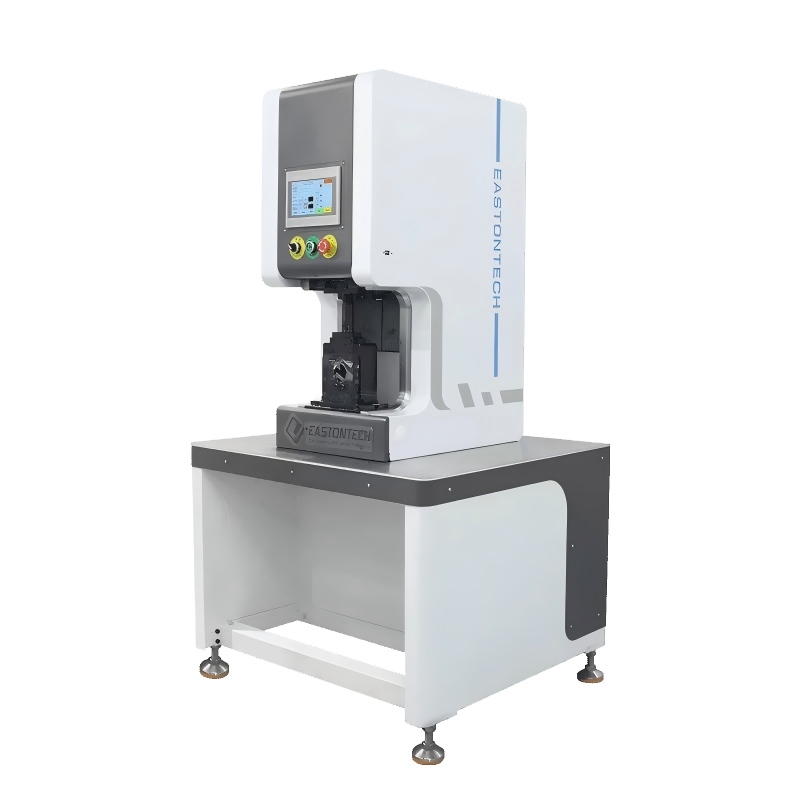
For standard terminal-processing applications, a dedicated terminal crimp machine can provide a controlled production platform for repeatable terminal termination. The actual machine configuration should be determined from the required wire range, terminal type, tooling, output, and quality-control requirements.
For applications centered on ferrule termination, a dedicated ferrule crimping machine may be more appropriate because ferrules require their own feeding, positioning, and crimping considerations. Matching the machine architecture to the actual terminal type helps avoid unnecessary adjustments and production compromises.
How Can Integrated Wire Processing Improve Overall Consistency?
Crimping is only one stage of wire harness production. The stability of the preceding operations can directly affect the quality of the finished termination.
If cutting length varies, the final harness may not meet dimensional requirements. If stripping varies, conductor insertion may become inconsistent. If wire feeding is unstable, terminal positioning can also become less predictable.
Integrating several wire-processing operations reduces the number of manual transfers between machines. A controlled sequence from cutting and stripping through feeding and terminal processing can create a more stable production flow.
For wire-to-wire connection applications, a wire jointing machine may be suitable when the production requirement involves automated joining or splicing rather than conventional terminal crimping. Selecting equipment according to the actual connection method is essential for maintaining an efficient and reliable process.
What Maintenance Practices Help Preserve Crimping Consistency?
Once a machine has been validated, maintaining its original mechanical condition becomes essential. Crimping equipment operates through repeated mechanical movement, so tooling and feeding components naturally require inspection over time.
The crimper and anvil should be checked for wear, deformation, contamination, and damage. Applicators, locators, and terminal-feeding components should also be inspected to ensure that terminal positioning remains stable.
Wire-feeding components deserve similar attention. Worn rollers, guides, clamps, or feeding mechanisms can change the conductor's position even when the machine does not generate an obvious error.
Crimp-height measurements can also be used as a maintenance indicator. A gradual change in measured values may suggest tooling wear or process drift and can provide an opportunity for corrective action before a larger quantity of harnesses is affected.
How Does Crimping Consistency Affect Wire Harness Reliability?
A terminal crimp provides both an electrical interface and a mechanical connection between the conductor and terminal. Its consistency therefore has a direct relationship with the reliability of the finished harness.
When crimp characteristics vary excessively, individual connections may exhibit different mechanical retention or electrical behavior. In addition to increasing the risk of defective products, variation can make troubleshooting more difficult because the manufacturer cannot easily determine whether the issue is isolated or process-wide.
A controlled automated process reduces this uncertainty. When wire positioning, terminal presentation, crimp geometry, and process parameters are kept within an established range, the resulting harnesses become more predictable.
This is especially valuable in industries where wire harnesses are used in demanding operating environments and where connection failures can lead to costly service or production consequences.
What Is the Difference Between Crimping Consistency and Crimping Strength?
Crimping strength describes the mechanical performance of a particular connection, while crimping consistency describes the variation between multiple connections produced by the same process.
These characteristics are related but not identical. A sample can meet a minimum pull-force requirement while the production process still shows excessive variation in crimp height.
A robust manufacturing process therefore aims to achieve both adequate mechanical performance and controlled process variation. This requires suitable tooling, validated settings, stable material handling, and appropriate inspection.
For high-volume production, consistency also creates a practical advantage in quality management. When the process is stable, manufacturers can identify abnormal trends earlier and spend less time investigating random-looking defects.
How Does Eastontech Approach Crimping Consistency?
Eastontech develops automated wire harness processing equipment with an emphasis on practical production requirements. Rather than treating crimping as an isolated pressing operation, the equipment configuration can be considered around the complete sequence of wire feeding, preparation, terminal processing, and quality control.
The appropriate solution depends on the manufacturer's product mix. A high-volume production line focused on one terminal family may prioritize cycle stability and dedicated tooling. A manufacturer producing many harness models may place greater importance on flexible tooling, programmable settings, and efficient changeovers.
Before selecting equipment, manufacturers should provide the wire specification, terminal part number, required crimp profile, strip length, wire length, expected production volume, target cycle time, quality requirements, and inspection requirements.
With this information, the equipment supplier can evaluate the machine, tooling, feeding system, and process requirements together. This approach is more useful than selecting a machine based only on rated force or advertised production speed.
Frequently Asked Questions
1. What is the most important factor in achieving consistent terminal crimps?
No single factor determines the final result. Crimp height, wire insertion depth, terminal position, tooling geometry, crimp force, and material compatibility all contribute to consistency. The most effective approach is to validate the complete process and then control the variables that can cause it to drift.
2. Does higher crimping force produce a stronger connection?
Not necessarily. Excessive force can over-compress the conductor or deform the terminal. The objective is to achieve the specified crimp geometry and mechanical performance rather than use the maximum force available from the machine.
3. How can crimp defects be detected during production?
Manufacturers can combine visual inspection, crimp-height measurement, pull-force testing, and crimp-force monitoring. Each method evaluates a different characteristic of the process, so combining them provides stronger quality assurance than relying on one method alone.
4. Why does tooling wear affect crimping consistency?
The crimper, anvil, applicator, and locator determine how the terminal is formed. As these components wear, the crimp profile and finished dimensions can gradually change. Preventive inspection and timely tooling replacement help maintain the validated process condition.
5. Can one automatic crimping machine handle different terminal types?
That depends on the machine design, applicator system, tooling compatibility, and terminal family. Some machines are designed for flexible production, while others are optimized for specific terminals and high-volume applications. Actual terminal part numbers should be reviewed before selecting equipment.
6. How should a new automated crimping process be validated?
The process should begin with the wire and terminal specifications. Compatible tooling should then be selected, machine parameters established, and trial samples produced. Crimp height, mechanical retention, visual characteristics, and other application-specific requirements should be verified before regular production begins.
Conclusion
A terminal crimp machine improves crimping consistency by controlling the variables that are difficult to reproduce manually. Stable wire feeding, accurate terminal positioning, repeatable tooling movement, controlled crimp height, and consistent machine parameters create a more predictable termination process.
The value of automation therefore extends beyond production speed. A well-configured crimping system can reduce operator-dependent variation, support repeatable production between shifts, simplify process validation, and help manufacturers identify process drift before it develops into large-scale rework or scrap.
For wire harness manufacturers, the best equipment choice is not necessarily the machine with the highest nominal speed or maximum crimping force. The more important consideration is whether the complete system can repeatedly produce the required terminal connection within a controlled and measurable process window.
With appropriate tooling, material compatibility, preventive maintenance, quality verification, and process monitoring, automated crimping provides a strong foundation for stable wire harness production. This process-oriented approach is also central to Eastontech's equipment development for manufacturers seeking reliable and scalable wire processing solutions.
External References
https://www.te.com/en/industries/automotive/insights/crimp-height-employing-effective-crimp-quality-metric.html
https://www.ipc.org/news-release/ipc-releases-ipcwhma-620e-requirements-and-acceptance-cable-and-wire-harness
https://www.molex.com/en-us/products/application-tooling
 English